- Art installations
OKO: The machine that never stops watching you
What happens when a machine starts to observe the world around it? The interactive installation OKO by Antonín Kindl connects computer vision, machine learning, and public space into an object that analyses its surroundings, interprets them, and projects its own view of reality. The project was created in PrusaLab as part of the Signal Calling challenge and premiered at the Signal Festival 2025.
Customer
Signal Festival, Antonín Kindl
Signal Creative
Installation / rental
Year
2025
Turnaround time
8 months

When the machine starts to watch the human
Festival visitors are used to observing works of art. In the case of the OKO installation, however, the roles are reversed. The object observes its surroundings, analyses the movement of people around it, and creates its own interpretation of what it sees. The spectator thus becomes part of a system that simultaneously observes and depicts them.
Technology as an artistic medium
OKO uses the principles of computer vision and machine learning. It does not work only with the image, but also with its own interpretations of reality. It observes, evaluates, creates assumptions and subsequently re-evaluates them. The result is not just projections of the surrounding world, but also visualisations of the processes by which the machine arrives at its conclusions.
An object designed for a public space
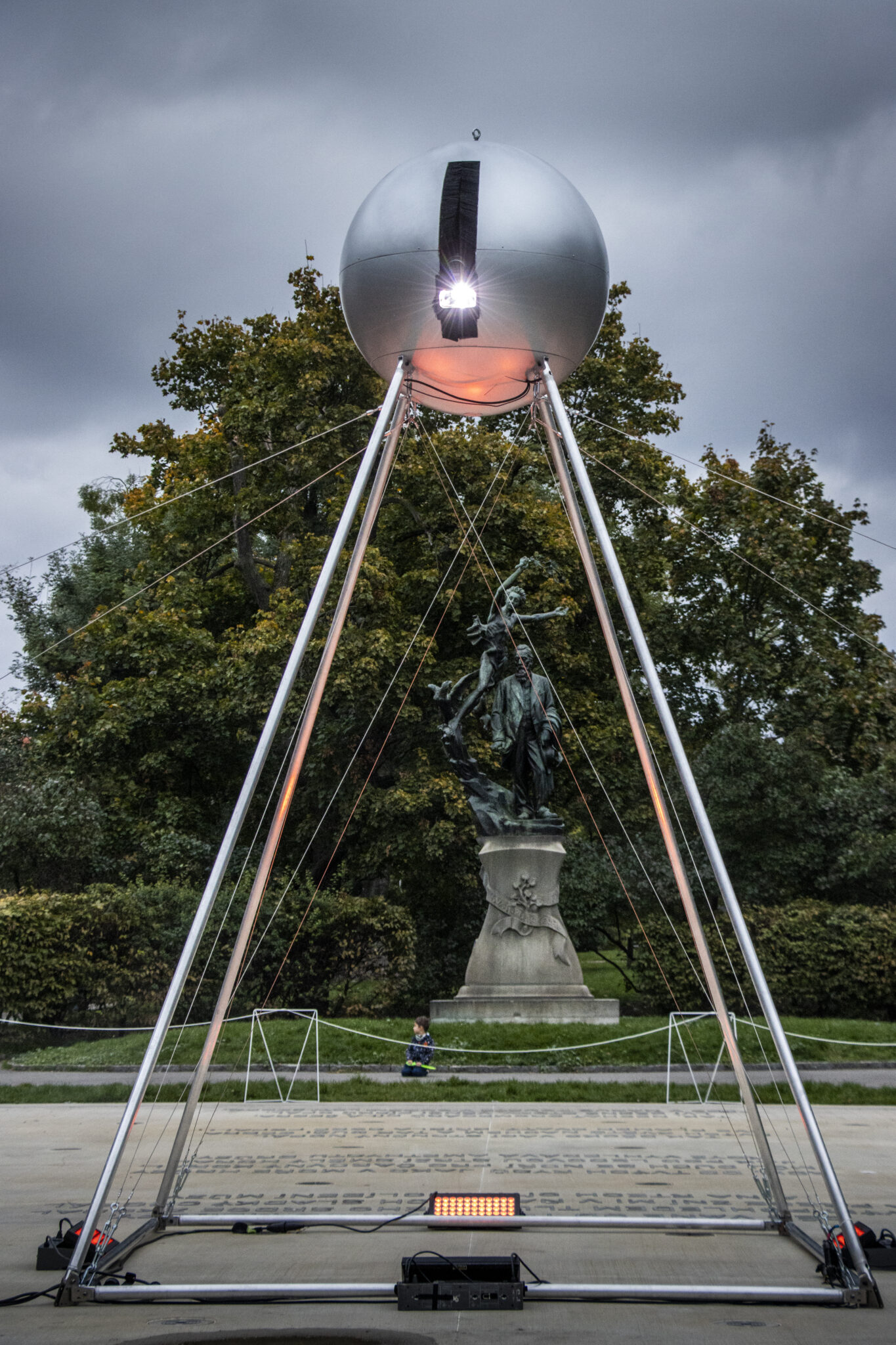
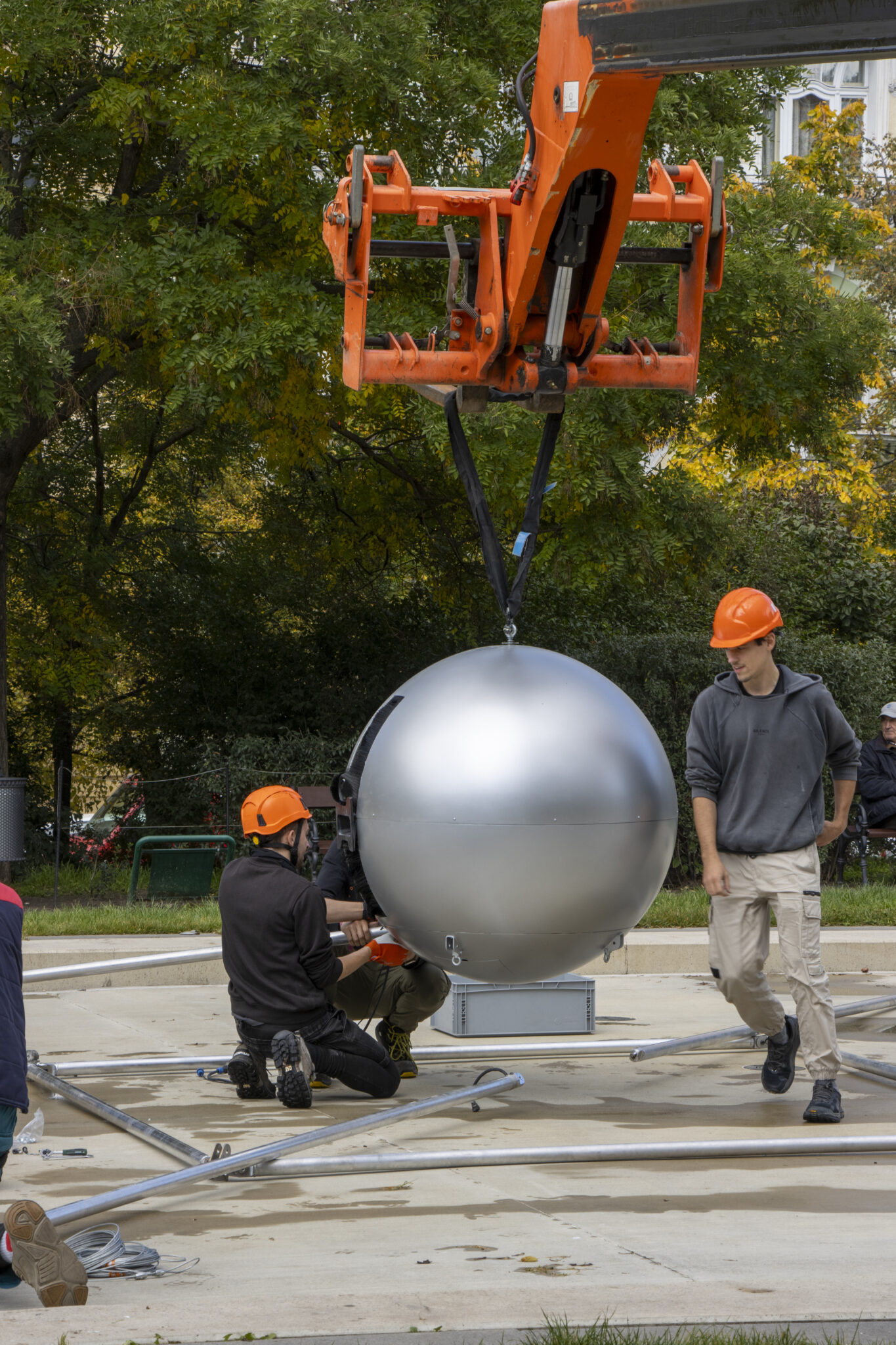
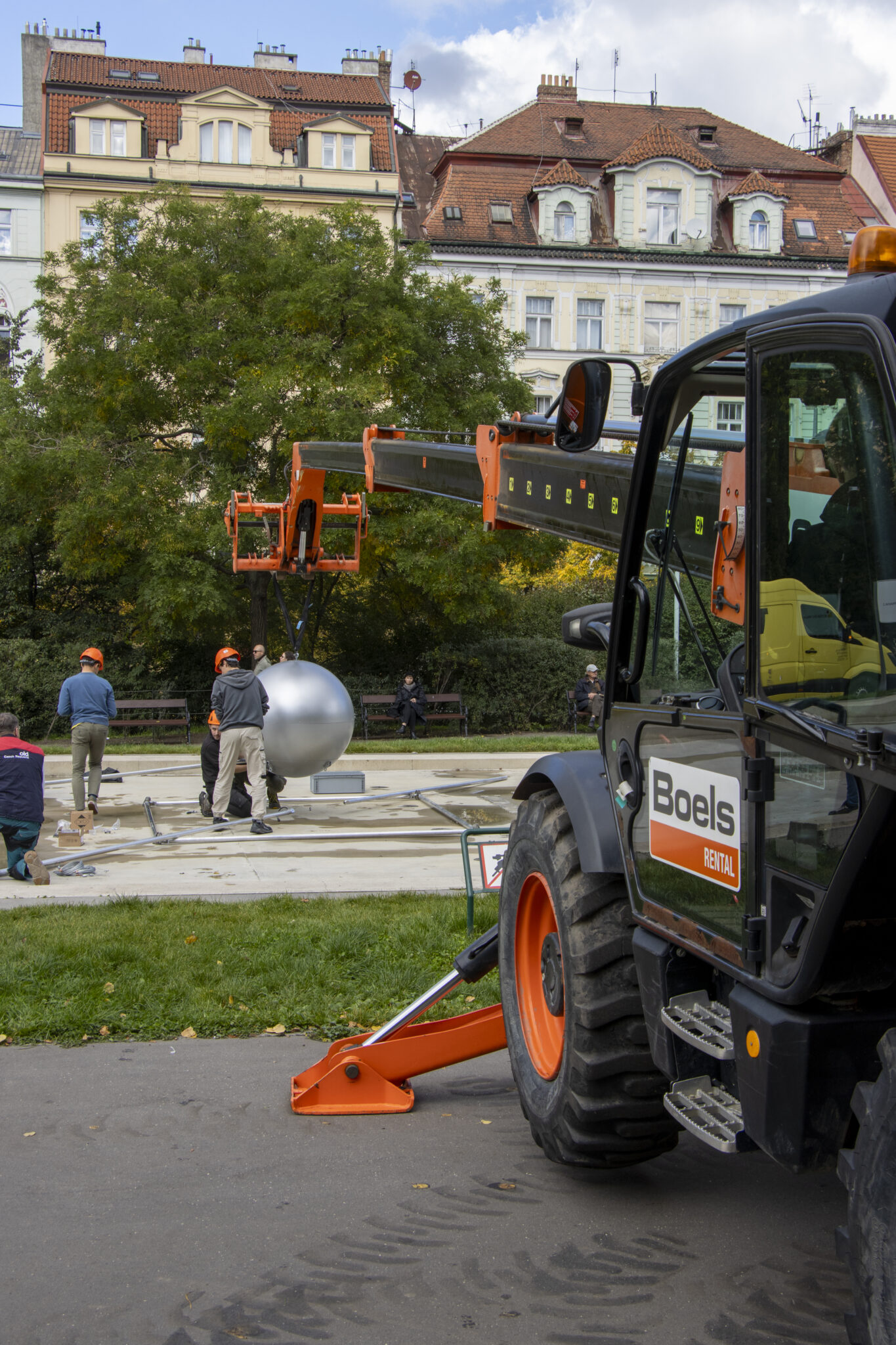
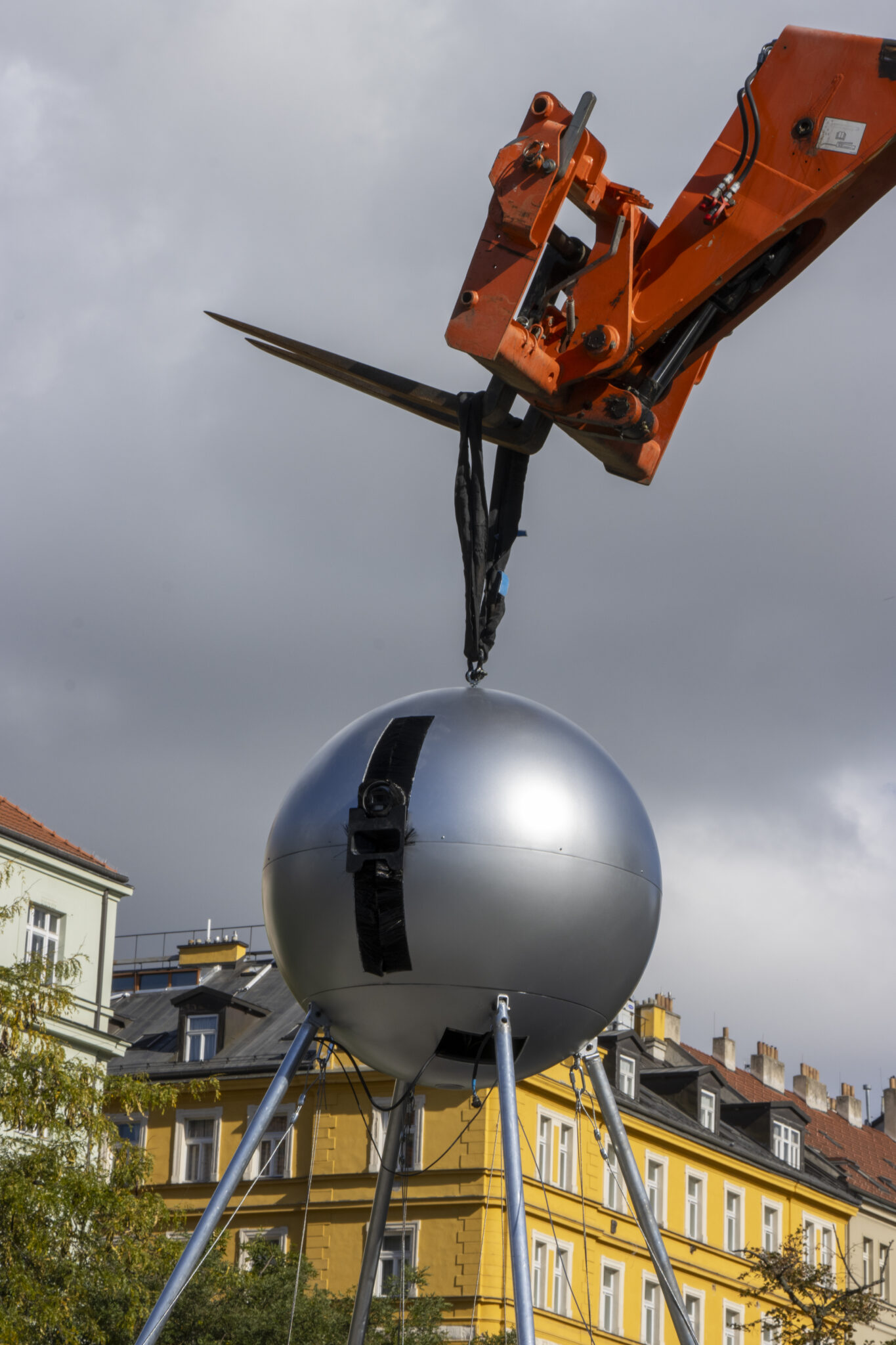
The installation was created for the outdoor environment of the Signal Festival. Its location in Svatopluk Čech Park meant it was necessary to design a structure resistant to weather conditions, temperature changes, and continuous operation. The technical solution had to ensure the reliable functioning of the mechanism, projection, and sensors for the entire duration of the festival.
Signal Calling in practice
The project was created as part of the open call Signal Calling, which the Signal Festival organises in collaboration with PrusaLab. The programme connects artists with technological partners and helps to turn experimental concepts into feasible installations. OKO is an example of how cooperation between artistic vision and technological development can lead to the creation of a unique work.
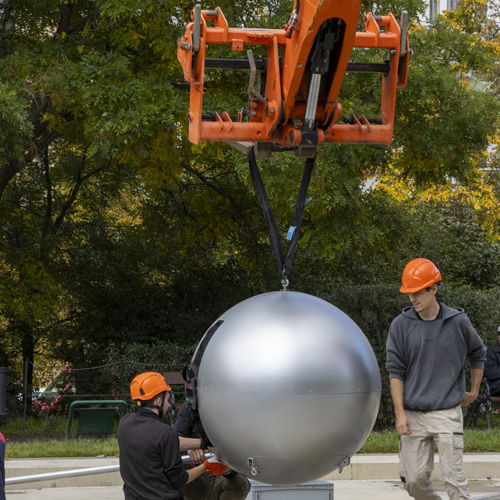
From concept to implementation
The OKO installation was created as part of the open call Signal Calling, which the Signal Festival organises together with PrusaLab. Its aim is to support the creation of new forms of digital art and to connect artists with experts from the fields of technology, manufacturing and development.
The author of the winning design became Antonín Kindl, who has long focused on the themes of human and machine perception. His concept presented the machine as an autonomous entity capable of observing the surrounding world, interpreting it and entering into a dialogue with visitors.
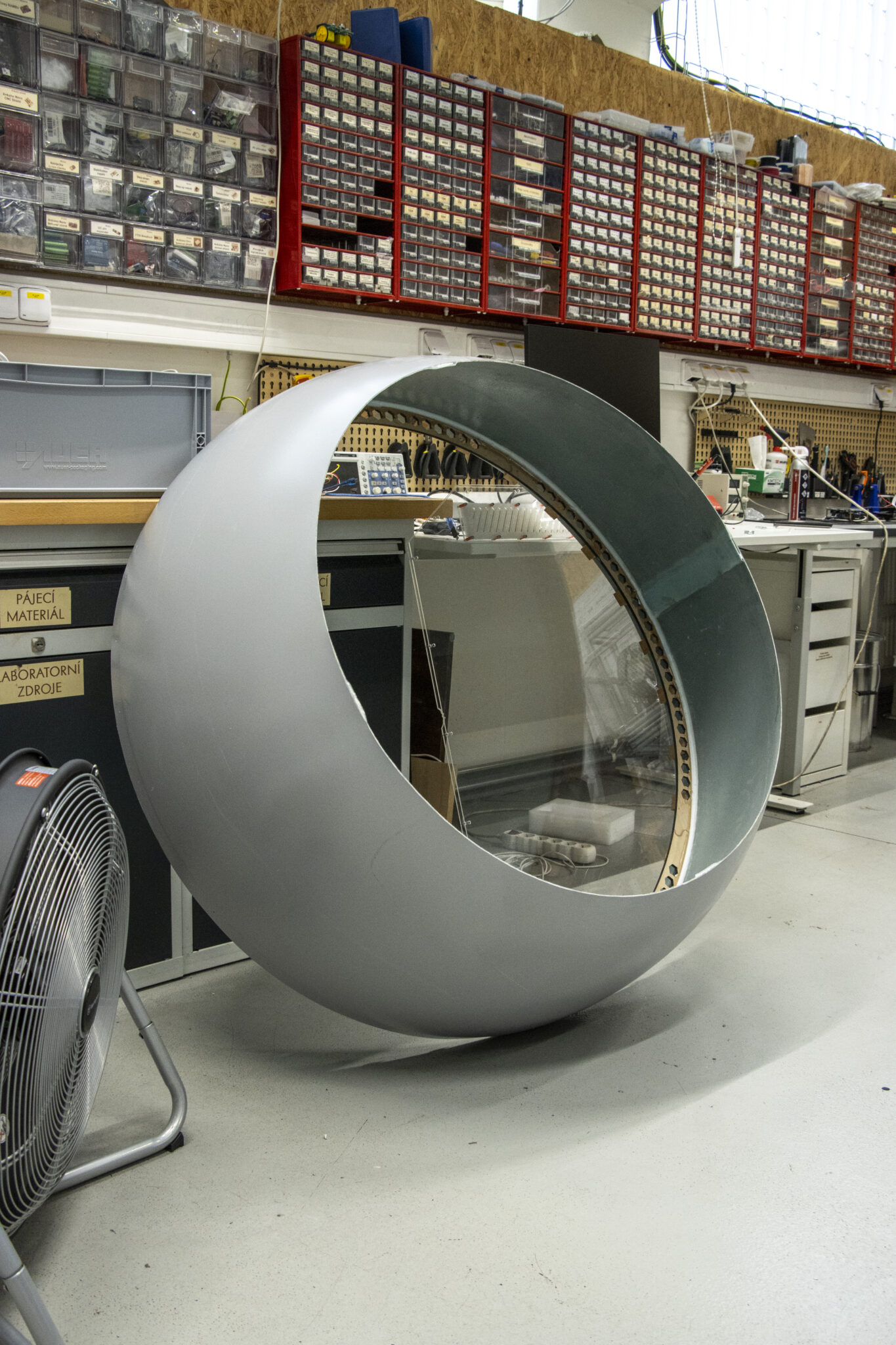
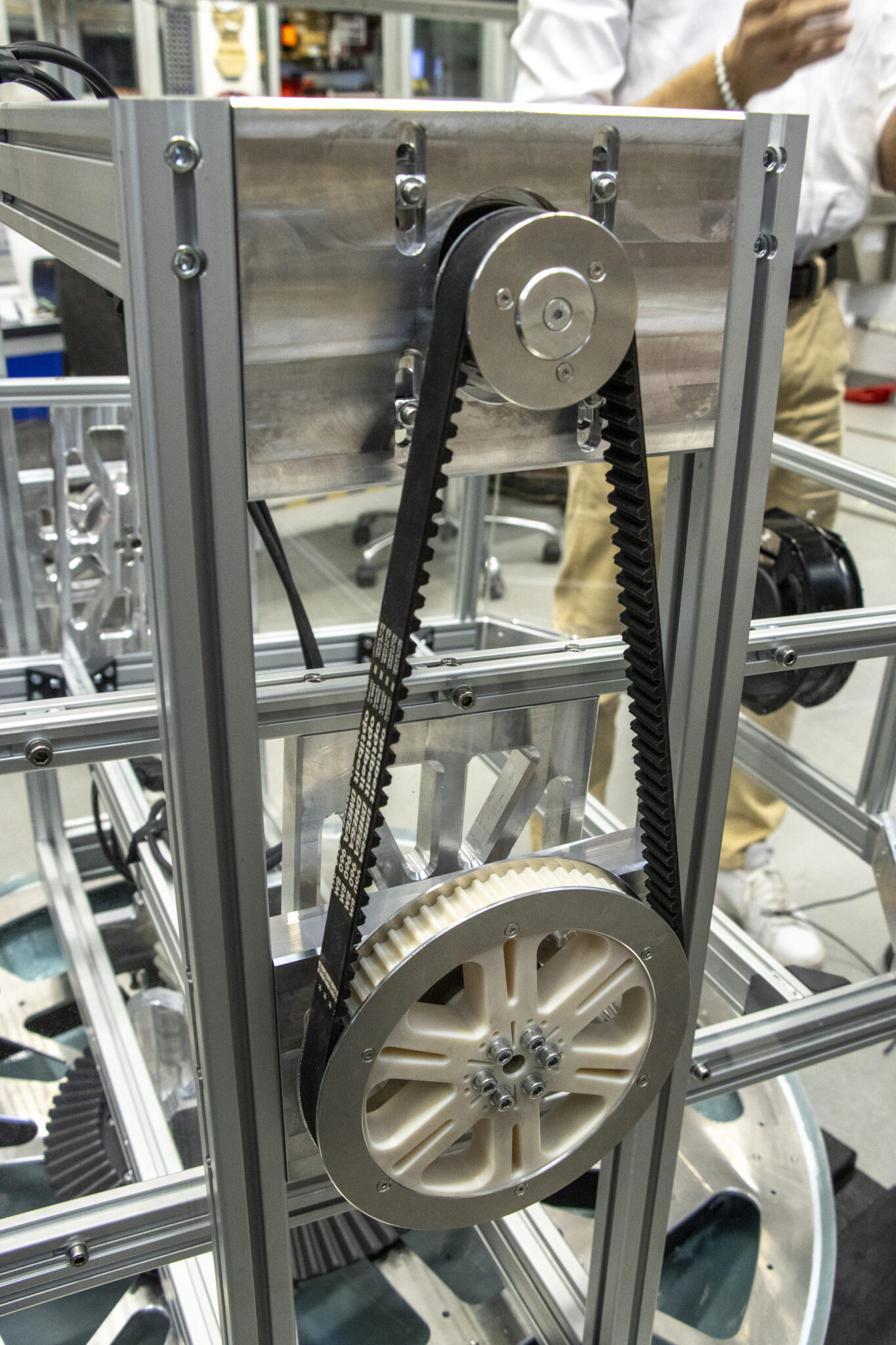
Over several months of cooperation, a complete installation was created in PrusaLab – from the initial prototypes and structural designs to the final technological solution intended for the public space.
Antonín Kindl: technology as a means of dialogue
In his work, Antonín Kindl moves on the boundary between art, technology and human perception. He is interested in how technologies transform the way we observe the world around us and how they can create new forms of communication between human and machine.
In the OKO installation, technology is not merely a tool. It becomes an active participant in the events. The object observes its surroundings, reacts to them, and creates its own interpretations of reality, which it then shares with visitors through projection.
It is precisely this ability to transform a technological system into a perceiving entity that forms the core of the entire installation.
How OKO works
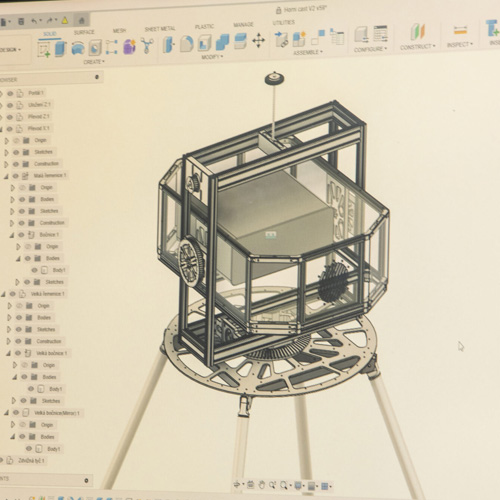
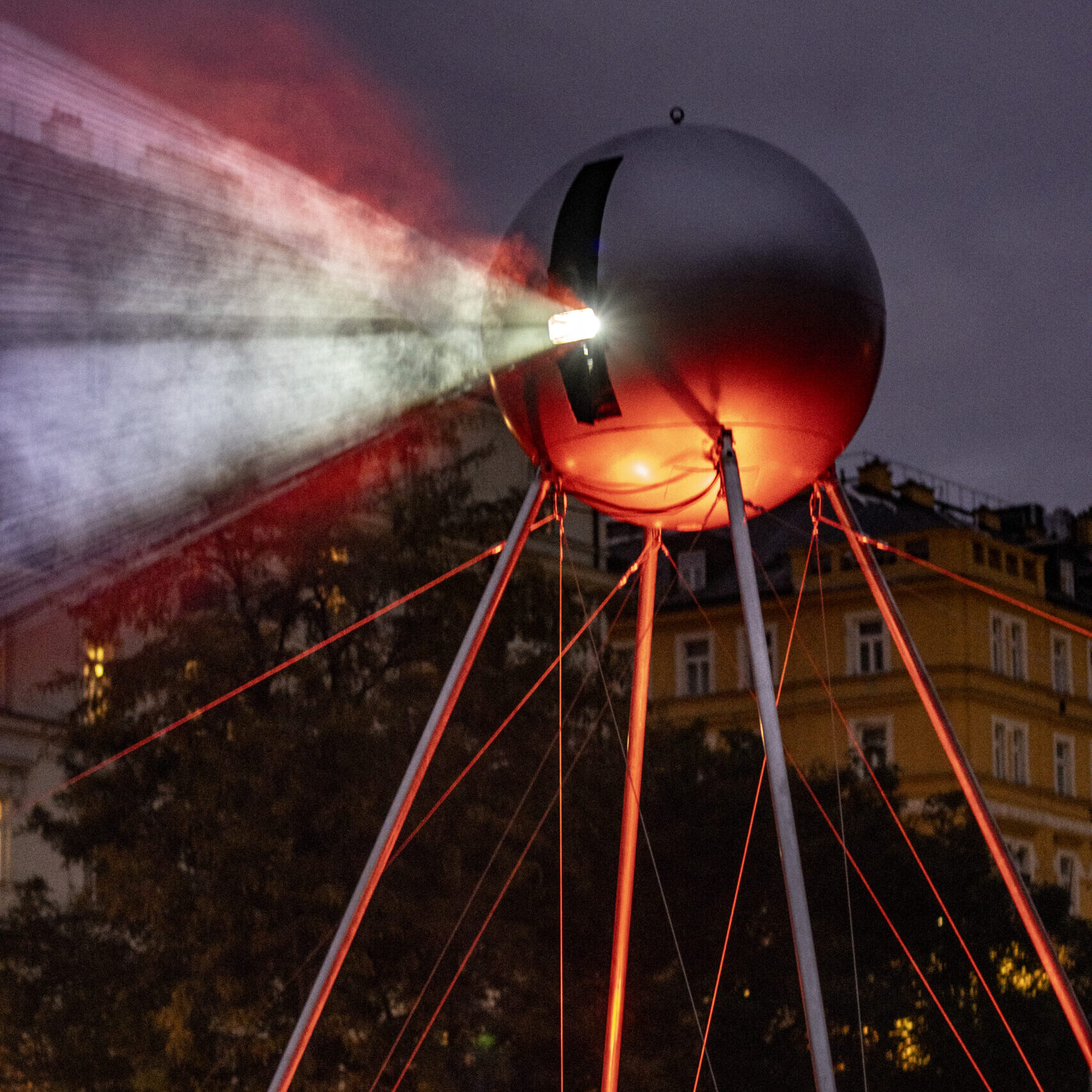
At the heart of the installation is a rotating head equipped with a projection system and sensors monitoring the surrounding space. The object is able to map its environment over a wide range, evaluate the acquired data and subsequently create visual outputs that react to the current situation.
Part of the system are computer vision and machine learning algorithms that continuously analyse the scene and create their own interpretations of the observed reality. What is interesting is not only the correct results, but also the errors and inaccuracies. It is precisely these that often reveal the limits and potential of machine cognition.
The resulting projection thus displays not only the surrounding world, but also the way in which the machine “sees” and understands it.
Technical challenges
Translating such a concept into a working installation meant solving several major technical problems.
One of them was outdoor durability. The installation had to function smoothly in the park throughout the entire festival regardless of the weather, temperature fluctuations, or high visitor numbers.
Another challenge was the real-time processing of image data. The object had to reliably analyse its surroundings, react to the movement of visitors and simultaneously generate smooth visual outputs.
Equally important was the visualisation of the computational processes themselves. The aim was not merely to project an image, but to allow visitors to gain insight into the way the machine thinks, interprets and creates its own ideas about the world around it.
Public space as part of the artwork
The location in Svatopluk Čech Park transformed the park itself into part of the installation. The movement of visitors, the surrounding architecture, the lighting conditions and the atmosphere of the place became input data for the system and influenced its behaviour.
The work was never the same again. Every interaction, every passer-by and every change in the environment created a new situation to which the object reacted.
Visitors did not merely become observers of the artwork, but an active part of it.
Result
The OKO installation during the 2025 Signal Festival became a striking example of the intersection of art, artificial intelligence and public space. The project demonstrated that contemporary technologies do not merely serve automation or efficiency, but can also be a medium for reflecting on how we perceive the world around us.
For PrusaLab, the project represented another opportunity to support the creation of an experimental work at the intersection of art and technology, and to help translate a bold artistic vision into a functional installation intended for thousands of Signal Festival visitors.