- Art installations
CTRL+Play at Kunsthalle Praha: When 3D printers turn into a musical instrument
An interactive installation for Kunsthalle Praha has turned eighteen 3D printers into a musical instrument. The CTRL+Play project connects technology, design, education and play, demonstrating that 3D printers do not only have to manufacture objects, but can also become part of a unique audiovisual experience.
Customer
Kunsthalle Praha
Region
culture, education, interactive installation
Year
2025
Turnaround time
4 months
When 3D printers start to play
What does a 3D printer sound like? Each of its movements creates a specific sound. In the CTRL+Play project, we utilised this feature and turned ordinary 3D printers into part of an interactive musical instrument. What is a side effect during standard printing has here become the main medium of the experience.
An orchestra composed of 18 machines
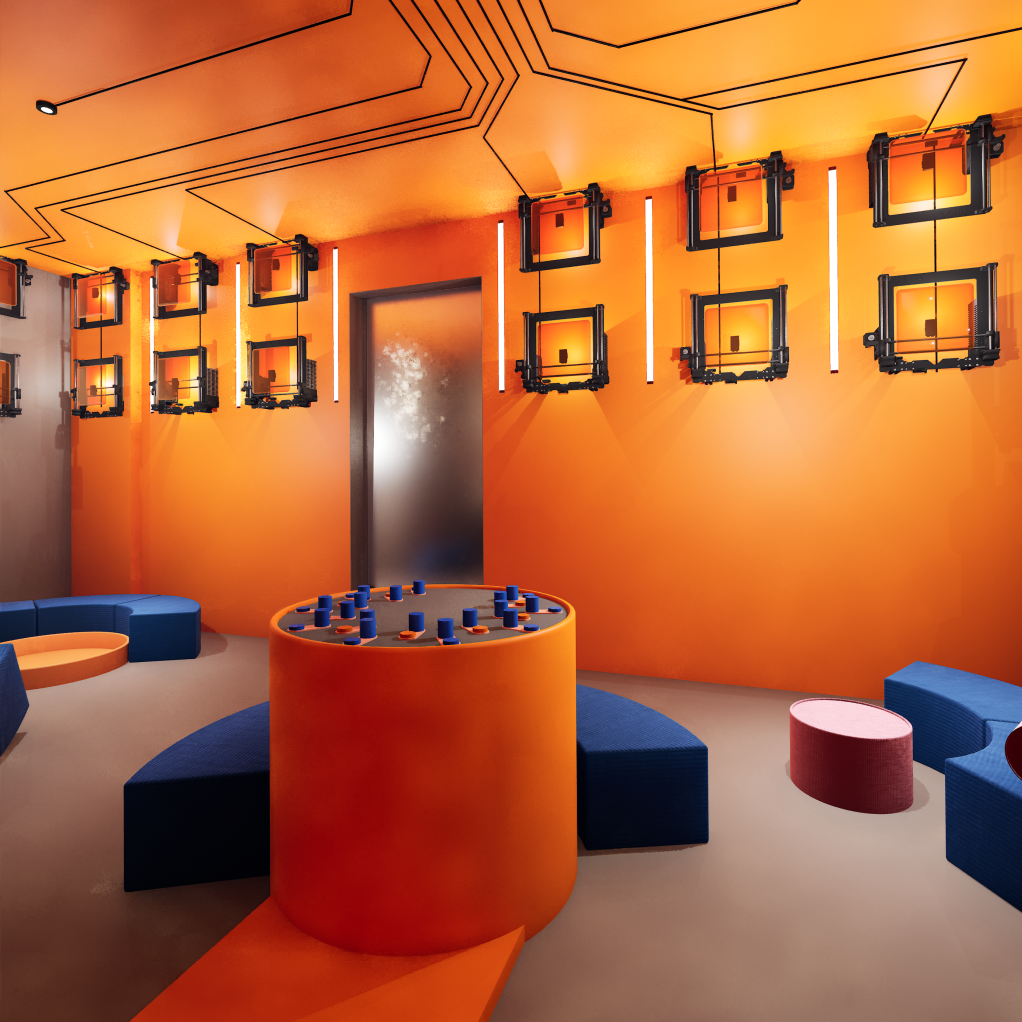
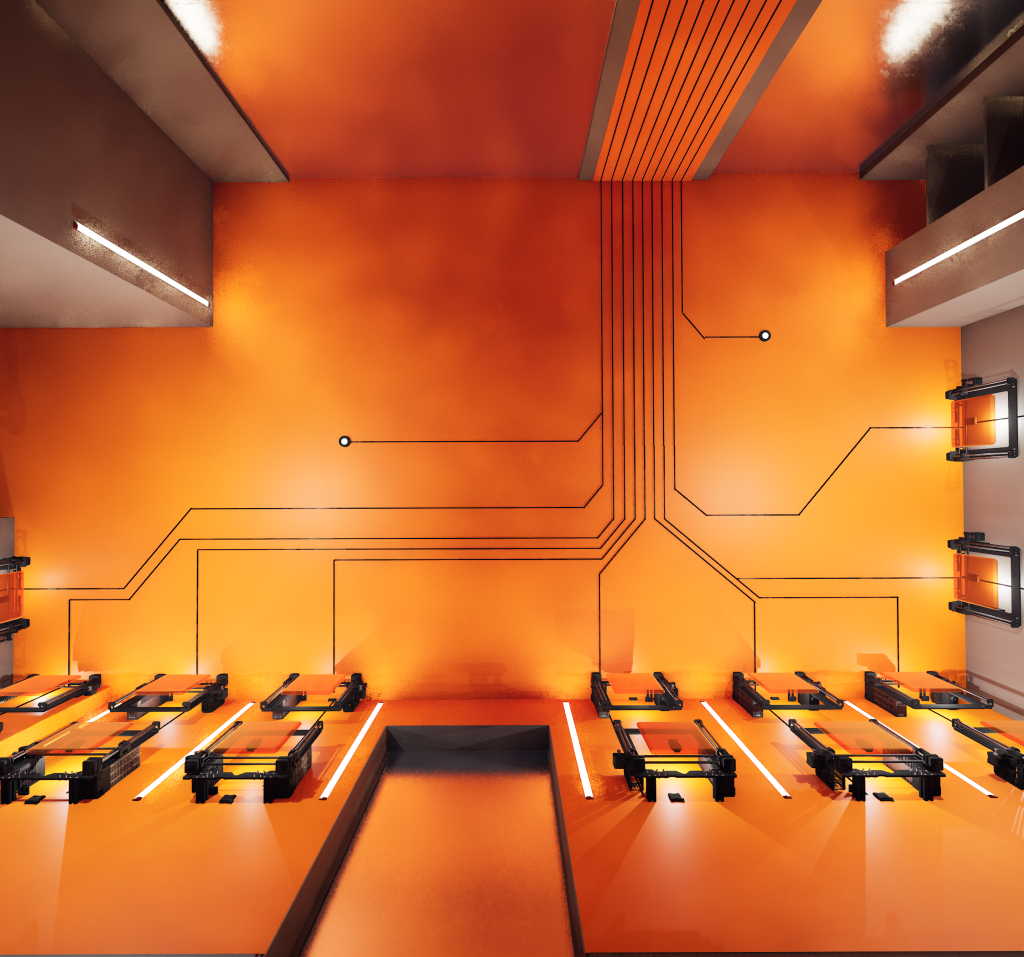
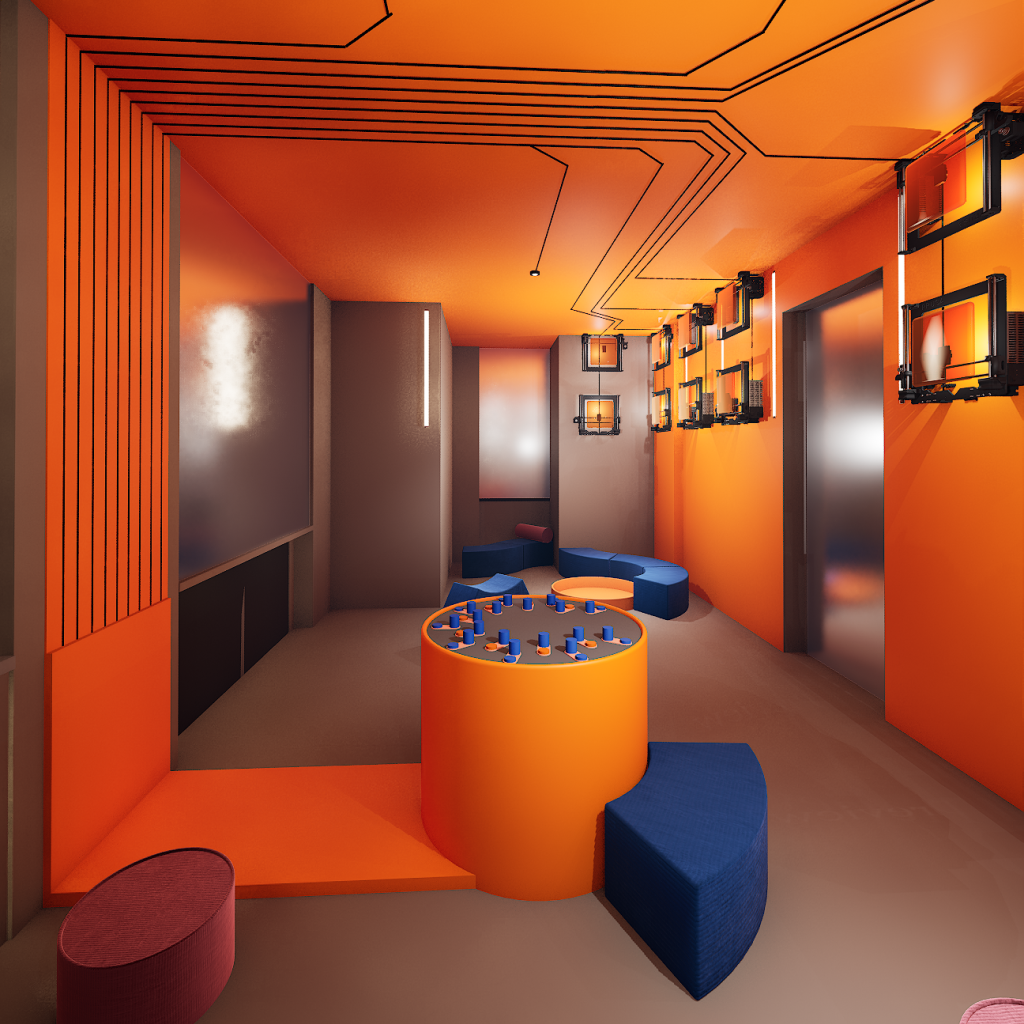
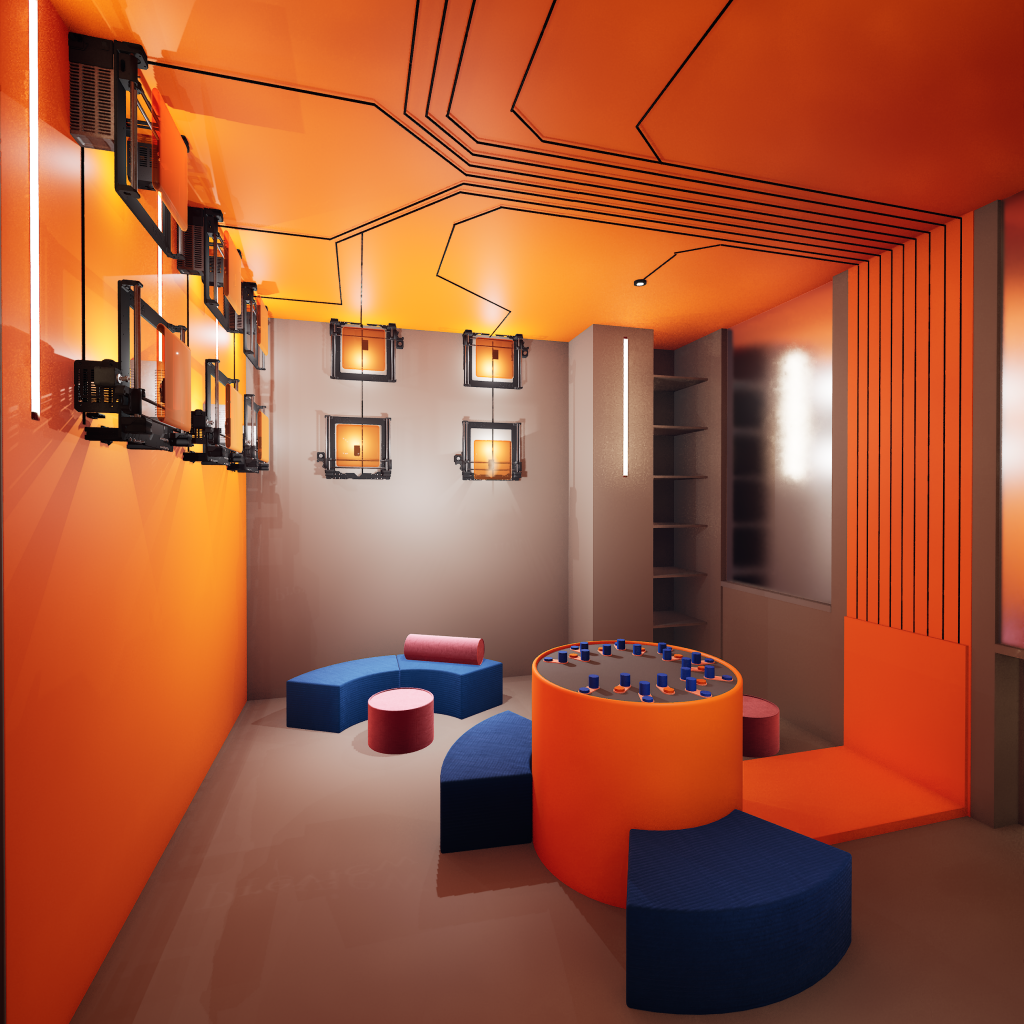
At the heart of the installation is an assembly of eighteen synchronised 3D printers. Their stepper motors generate individual notes that combine into a shared composition. Each printer acts as an independent instrument, yet together they form a single entity that responds to the instructions of visitors.
Technology you can touch
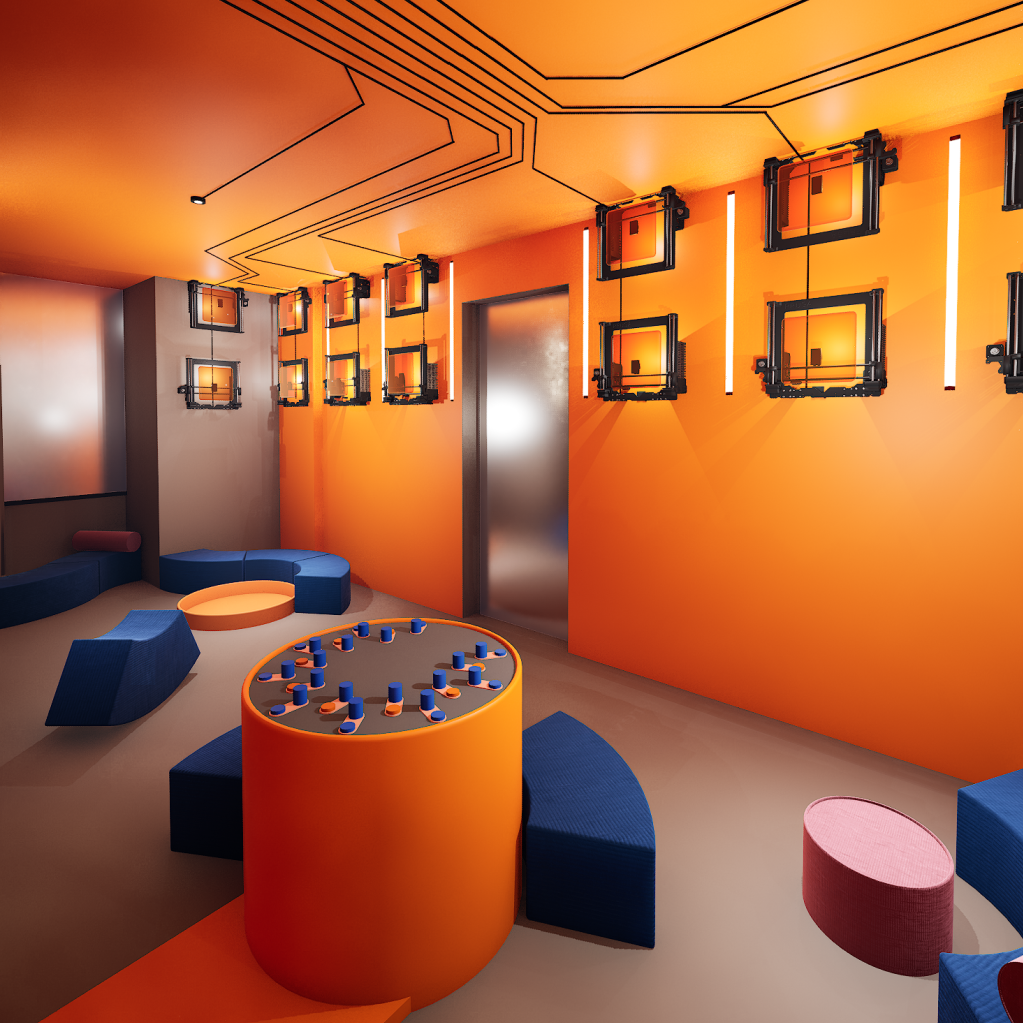
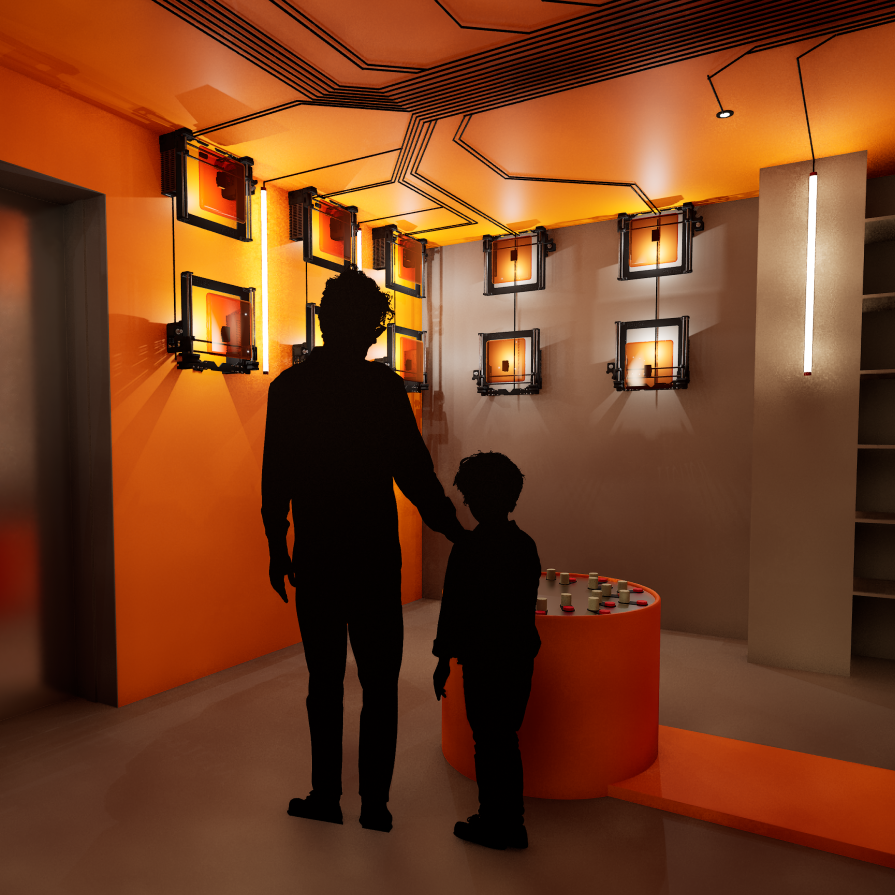
CTRL+Play was created for the Kidshalle space at Kunsthalle Praha, where visitors can not only view technologies, but also actively control them. Using a special console, they trigger sounds, lighting effects and the movement of printers, becoming a part of the artwork itself.
3D printing as part of development
3D printing also played an important role in the development of the installation. Using rapid prototyping, we verified design solutions, produced functional parts and gradually fine-tuned the appearance of individual components. The same technology that makes up the exhibit itself thus became a tool for its development.
Technology that plays with itself
The CTRL+Play installation was created specifically for the Kidshalle space at Kunsthalle Praha – an experimental and educational zone designed for both child and adult visitors. Its aim is to bring contemporary art, technology and creativity closer through the active participation of visitors.
Kunsthalle Praha itself is housed in the former Zenger substation and has a long-standing focus on the themes of electricity, light, energy and movement. CTRL+Play follows on naturally from this history. Instead of a traditional exhibition, a living system has been created here in which visitors can influence what happens around them.
Using a specially designed controller, they control the movement, lighting effects and sound of individual modules and create their own short compositions. Thus, they are not mere observers, but become part of the artwork itself.
Michael Rosa: when a production machine becomes a musical instrument
The concept creator is Michael Rosa, a digital designer and multidisciplinary creator specialising in CGI, 3D scanning and interactive projections. In his work, he has long combined visual culture, music and technology, seeking new ways to actively involve the audience in the resulting work.
In the CTRL+Play project, he came up with the idea of turning standard manufacturing technology into a musical instrument. The basic principle of the installation is based on a simple observation – the movement of a 3D printer creates sound.
Stepping motors, which are commonly used for the precise positioning of the print head, generate characteristic frequencies during movement. Instead of being suppressed, these have become the main building block of the entire installation. CTRL+Play thus utilises the natural properties of the technology and transforms them into an audiovisual experience.
Eighteen printers working like an orchestra
PrusaLab became the technological partner of the project, taking charge of the development and implementation of the entire hardware component of the system.
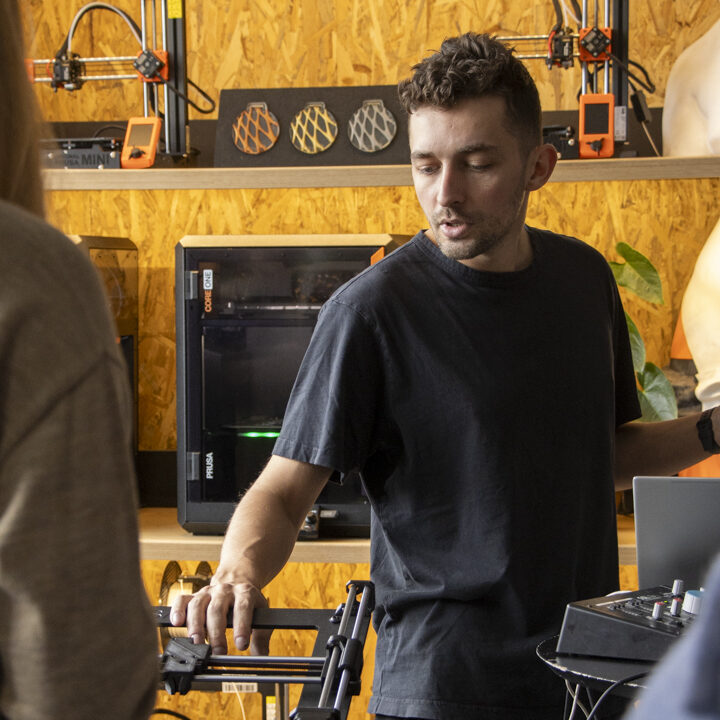
The basis of the installation consists of eighteen separate modules built on Original Prusa MK2S printer frames. The original mechanical construction, axes and stepper motors have been retained, but the printing function itself has given way to a new purpose.
For the purposes of the installation, we developed our own control electronics and synchronisation system, which makes it possible to control all modules simultaneously as well as individually. Each printer functions as an independent tool, while at the same time being part of a larger whole.
The entire system is controlled by a central controller designed by Michael Rosa, while electronics developed in PrusaLab ensure real-time communication and synchronisation of all eighteen devices.
The development included electronic design, prototype manufacturing, motion stability testing, tuning of the motor acoustics, and optimisation for long-term gallery operation.
Music hidden in machines
On the musical form of the project collaborated Leoš Hort, performing under the pseudonym HRTL. The Czech electronic musician, modular synthesizer performer and musical hardware developer helped translate the technical parameters of the system into a musical language.
His role consisted of designing rhythmic structures, consulting on the interactive behaviour of the system, and finding ways to connect the mechanical precision of machines with musical dynamics.
A significant advantage was also his several years of experience at Prusa Research. Thanks to this, he was able to combine a deep understanding of 3D printing technology with musical practice and experimental electronics.
The challenges that were not seen
At first glance, CTRL+Play looks like a playful installation. Behind the resulting experience, however, lies a series of technical challenges.
One of them was the very use of printer mechanics as a musical instrument. It was necessary to preserve the original construction of the device and at the same time control it in a way that allows the precise creation of sounds and rhythms.
Another challenge was the synchronisation of all eighteen modules. The installation works rather like an orchestra – the individual parts have to react at the right moment and with absolutely precise timing.
Equally important was the robustness of the entire system. The exhibition is intended for daily use by the public, including child visitors, so it was necessary to ensure high reliability, safety, and long-term stability.
When 3D printing pushes its own limits
CTRL+Play shows that 3D printing does not have to be merely a manufacturing technology. It can become a musical instrument, an interactive exhibit or a medium for education.
The project connects open hardware, engineering development, musical experimentation, and gallery education into a single functional whole. For PrusaLab, it represents an example of how a technological workshop can function as a connecting link between artists, designers, and technical specialists.
It is precisely projects like these that we enjoy the most. Projects that push technologies beyond their original use and open up new possibilities for introducing them to the public.