- Art installations
Audire Fluctus: A sculpture that reveals the invisible world
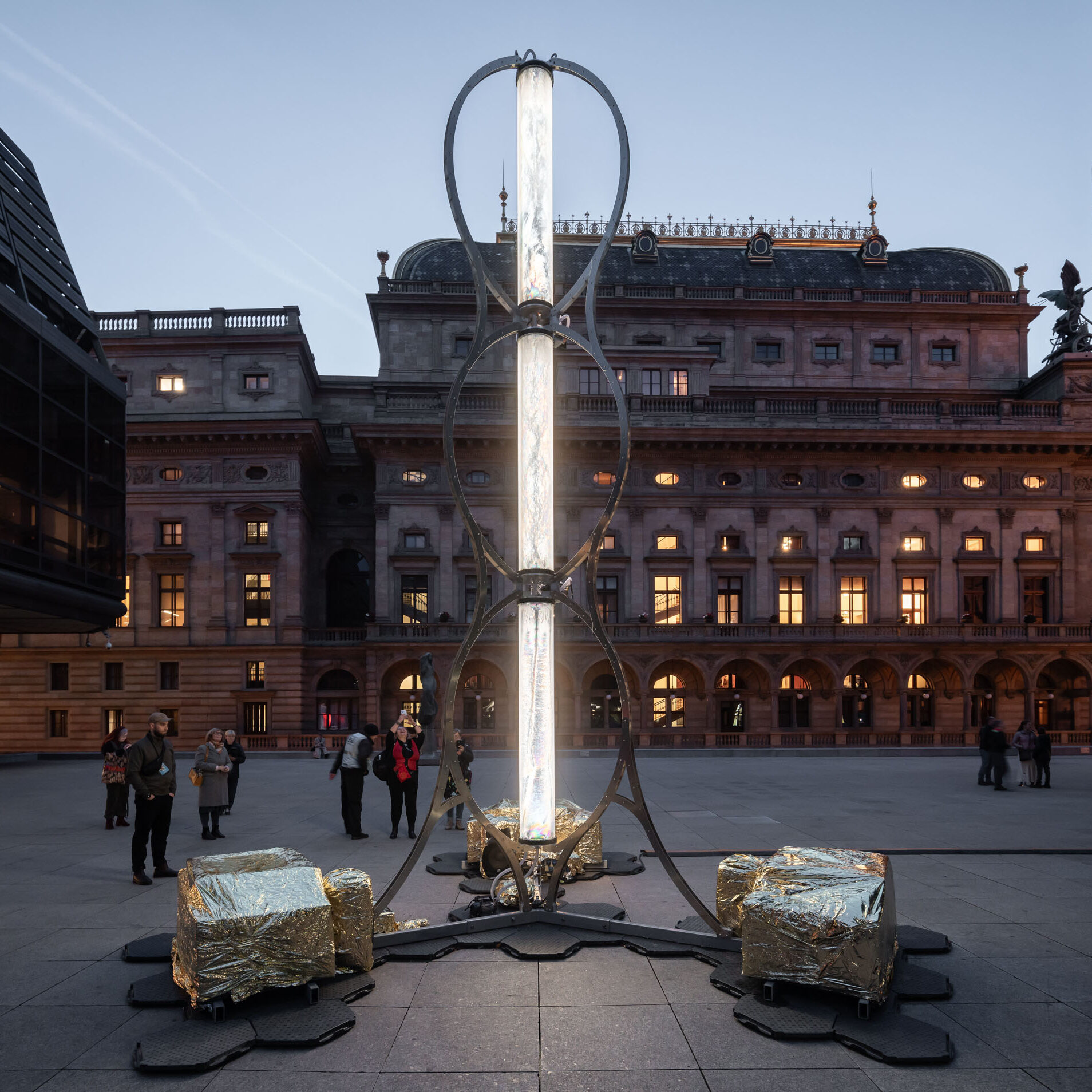
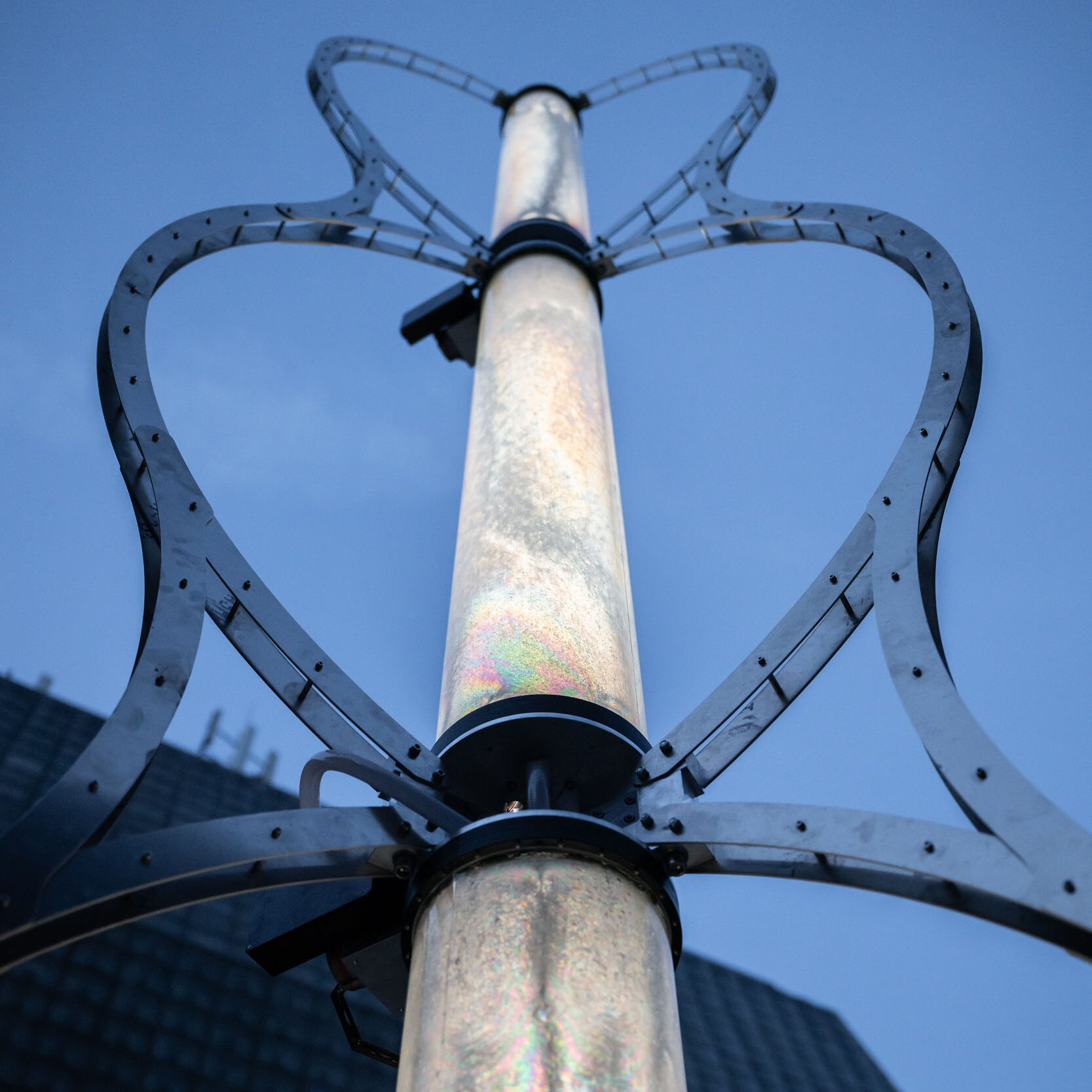
What does the world that constantly surrounds us, but which we never see, look like? The Audire Fluctus installation transforms electromagnetic waves into a fascinating play of light, colour and movement. The seven-metre-long light object was created in collaboration with Kryštof Brůha and PrusaLab as part of the Signal Calling challenge, and became one of the standout works of the 2024 Signal Festival.
Customer
Signal Festival, Kryštof Brůha
Signal Creative
Installation / rental
Year
2024
Turnaround time
8 months
The invisible world around us
Mobile networks, Wi-Fi, radio or Bluetooth. Electromagnetic waves surround us every day, yet the human eye cannot perceive them. Audire Fluctus gives this hidden world a visible form, allowing visitors to observe something that normally remains hidden.

When physics creates art
The installation connects an artistic concept with the principles of optics, light polarisation and the flow of the specially developed Spectraflux liquid. The result is not a static object, but a constantly transforming light organism reacting to data from the surrounding environment.
Seven metres of technology and experiments
Audire Fluctus measures seven metres, weighs approximately half a tonne and contains 108 litres of optically active liquid. Every detail of the construction had to be designed with regard to safety, stability and long-term operation in a public space.
Signal Calling in practice
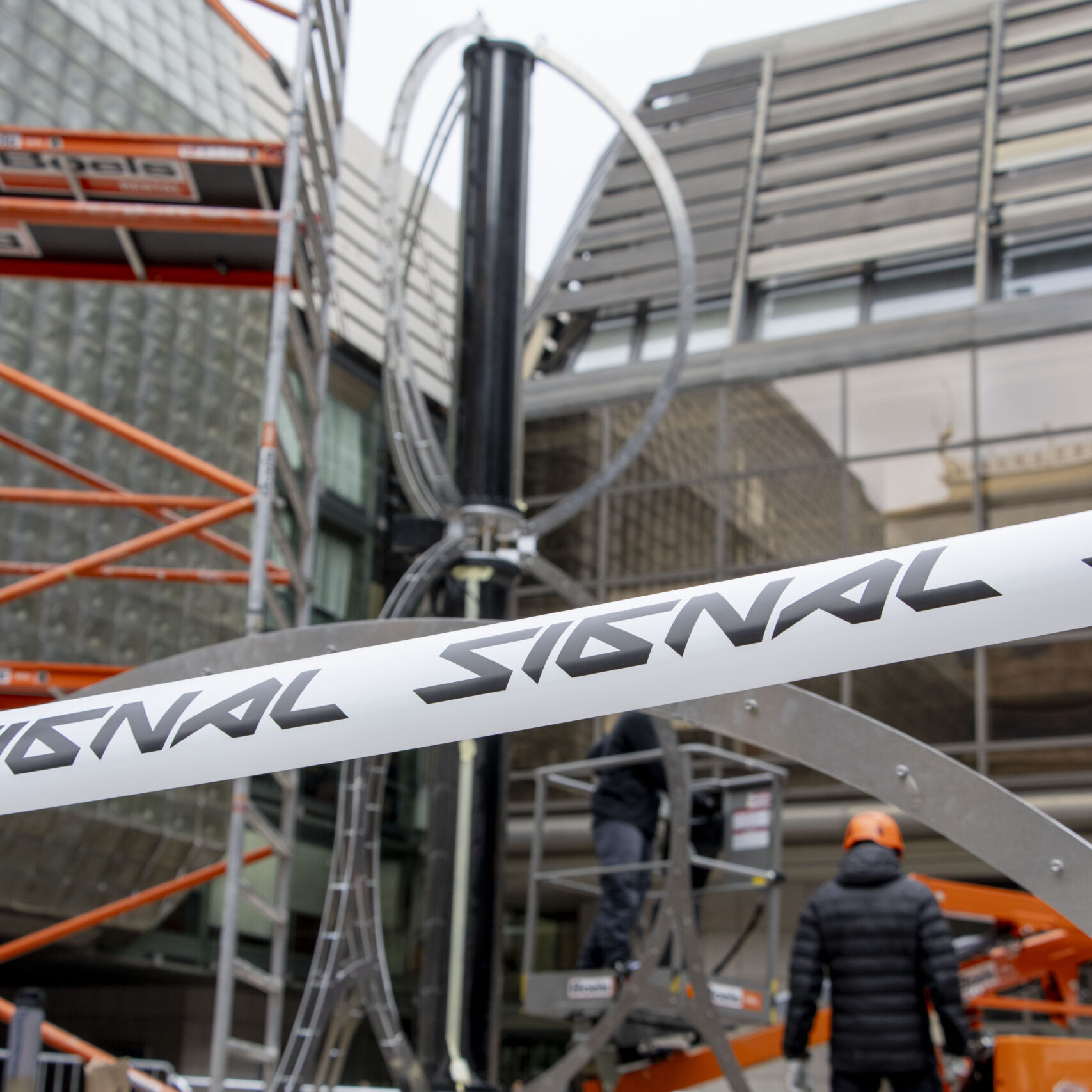
The project was created thanks to the Signal Calling programme, which connects artists with technology partners and helps to translate experimental ideas into viable installations. Audire Fluctus is a demonstration of how collaboration between artistic vision and technological development can lead to the creation of a unique work.

How to make a show out of something that can't be seen
Audire Fluctus arose from the question of how to visualise phenomena that are normally imperceptible to human senses. The project's creator, Kryštof Brůha, has long been concerned with the relationship between technology, physics and human perception. For the 2024 Signal Festival, he designed an object that converts electromagnetic waves into the form of light, colour and movement.
The result was a seven-metre “data totem” that allows visitors to look into the hidden world of electromagnetic fields and realise how significant a role modern technology plays in our everyday lives.
Kryštof Brůha: Between Science and Fantasy
Kryštof Brůha is among the artists who combine art, physics and experiment in their work. He is primarily interested in how invisible natural or technological processes can be translated into forms that humans can perceive and experience.
Audire Fluctus is an example of this approach. The installation does not work with electromagnetic waves merely as a source of data, but transforms them into an aesthetic experience that invites contemplation of the world around us.
As the author himself says:
“I wanted to give festival visitors an insight into the hidden world of electromagnetic waves and a better understanding of how technology affects our environment and our perception of reality.”
How Audire Fluctus works
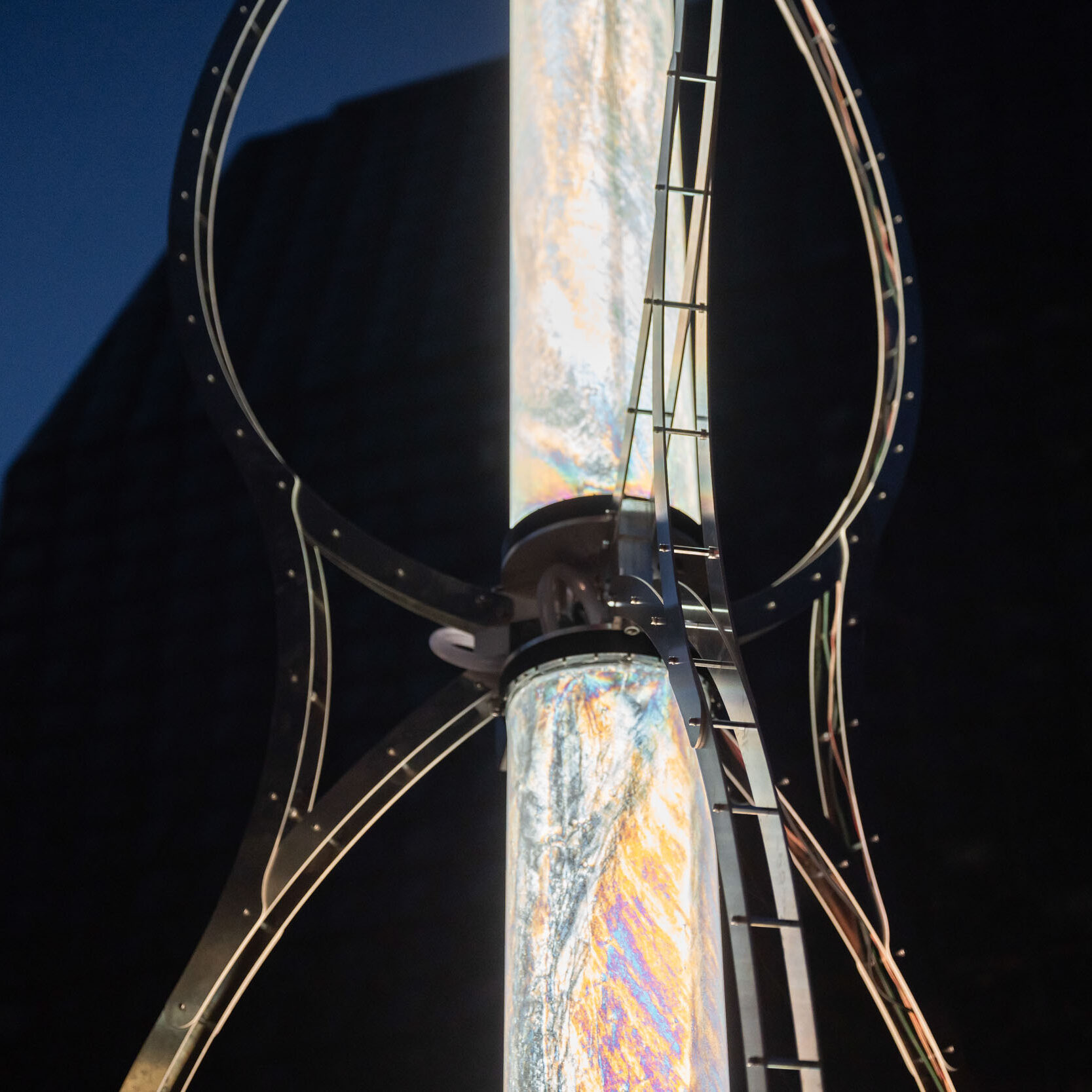
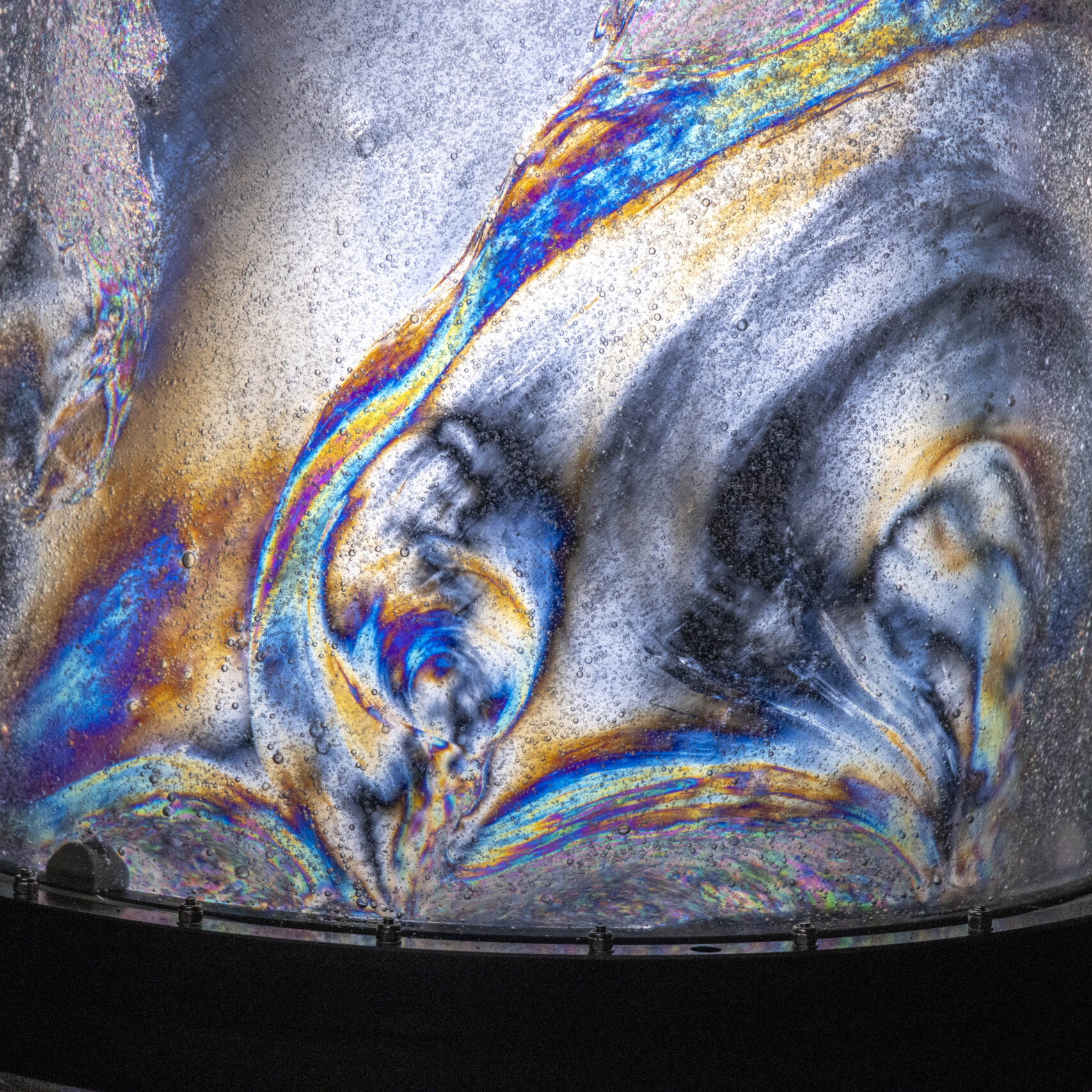
At the heart of the installation is a unique liquid, Spectraflux, which Kryštof Brůha developed specifically for this project. The liquid contains particles capable of altering polarised light and thus creating its characteristic colour effects.
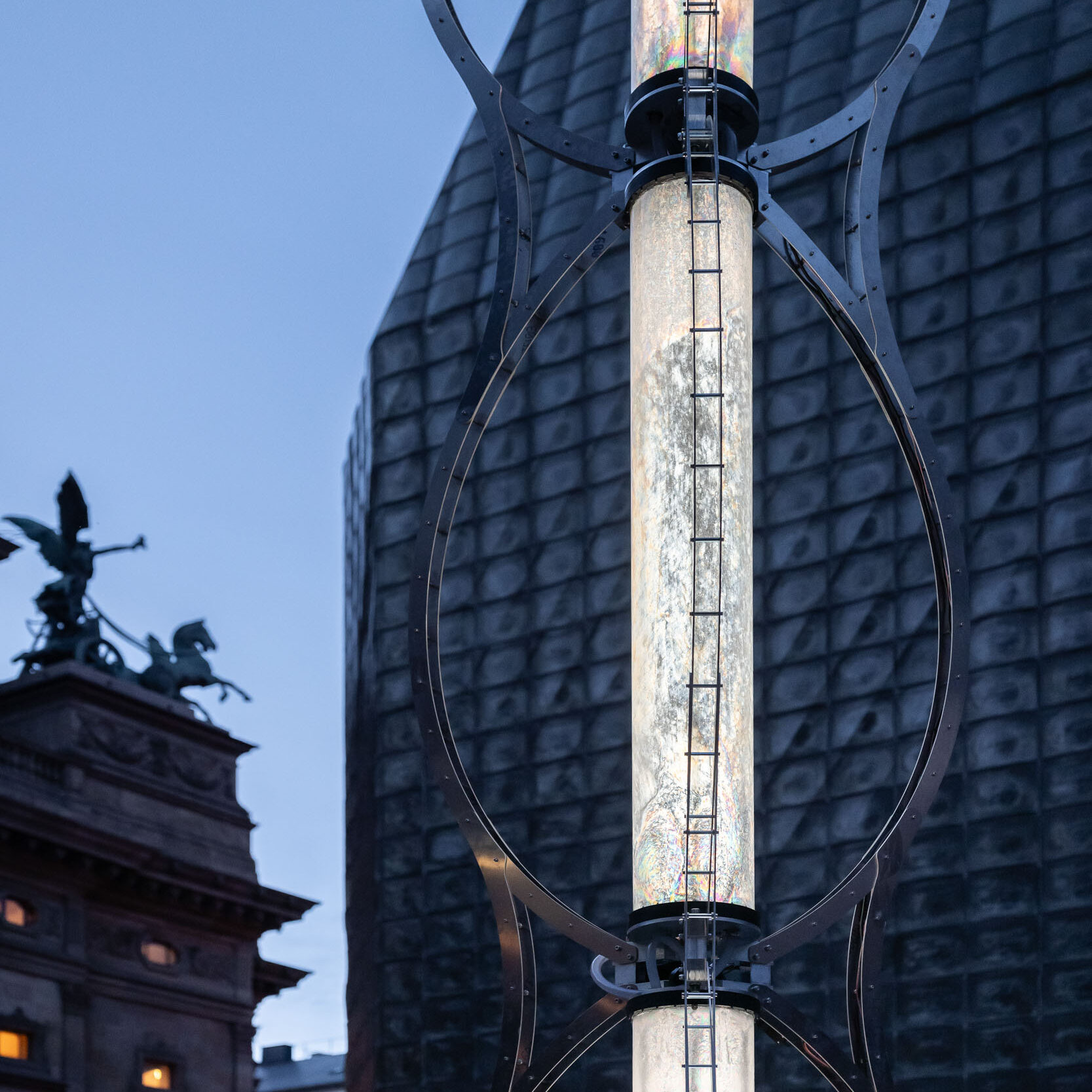
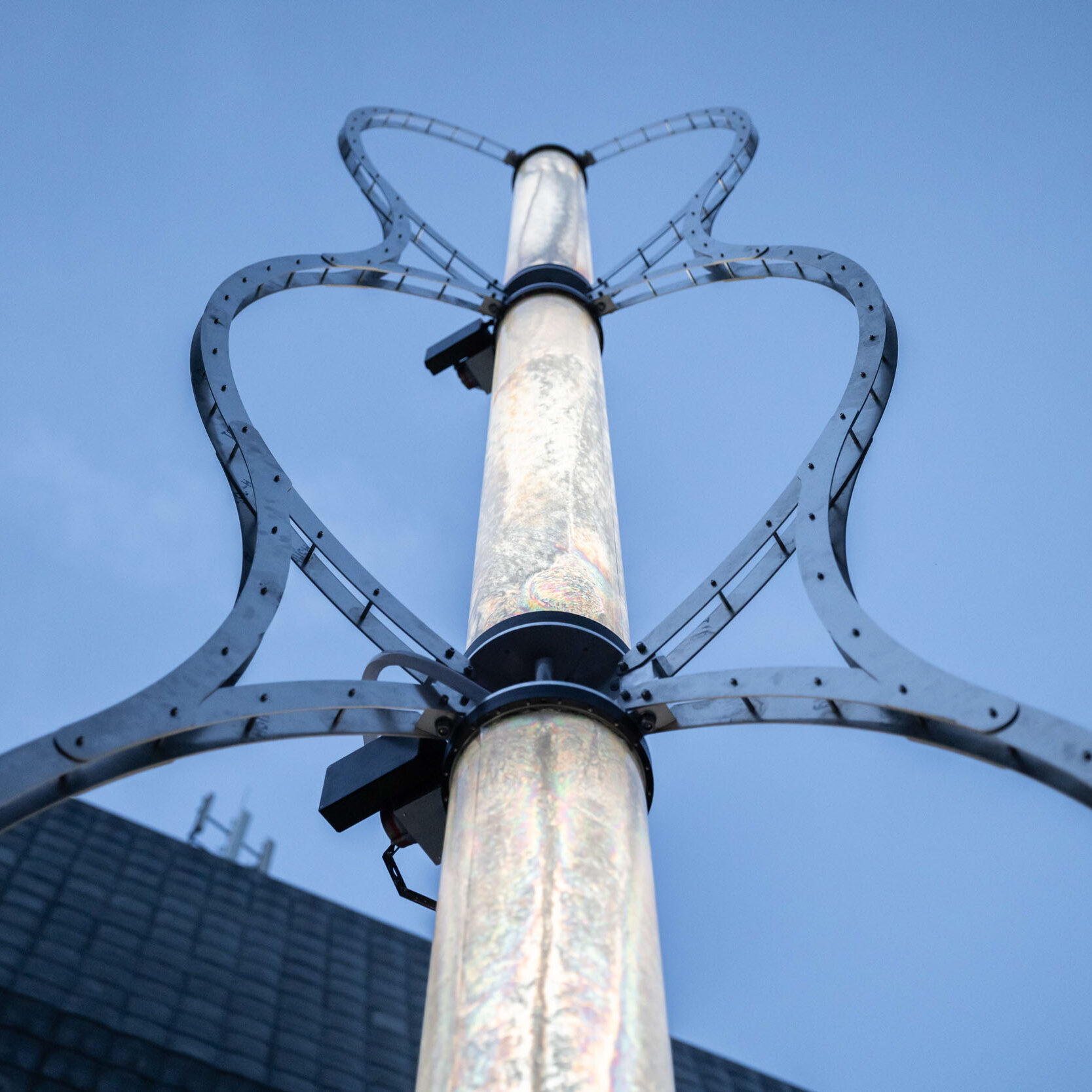
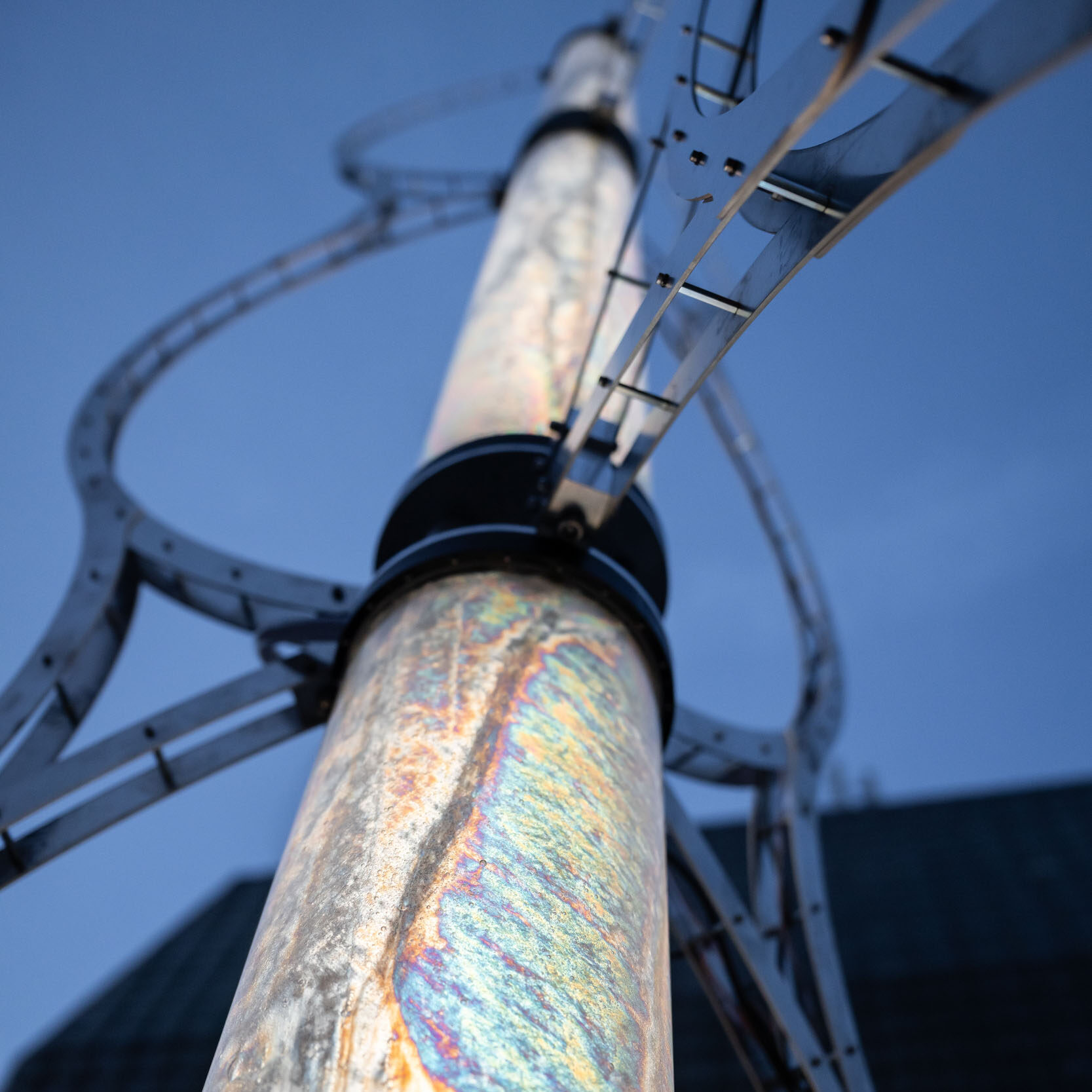
The sculpture itself consists of three separate segments formed by a pair of concentric acrylic cylinders. The space between them is filled with Spectraflux. In the centre of each segment is a powerful LED light source, the light of which passes through a system of polarising films and a layer of liquid.
The result is a variable colour structure that is created by a combination of light, fluid flow and the optical properties of the entire system.
Electromagnetic waves converted into motion
The movement of the Spectraflux is provided by three powerful bidirectional pumps. Their activity is not random. Kryštof Brůha first recorded electromagnetic waves at the site of the future installation and converted the obtained data into digital form.
It was precisely this data that subsequently determined the behaviour of the pumps and thus the resulting movement of the liquid inside the sculpture. The installation thus visualised the real electromagnetic environment of its surroundings.
The electronic system was created in PrusaLab. We developed our own control electronics, firmware, and complete sequences for controlling the pumps. The solution also included new control units that replaced the original electronics of the pumps used.
Public space structures
As the installation was intended for the outdoor environment of the Signal Festival, it was necessary to pay great attention to the structural design.
The supporting system consists of a duralumin structure connecting the individual segments to the base. This is anchored by three weighted arms, which ensure the stability of the entire installation even in adverse weather conditions.
The project author collaborated with the PrusaLab team on the structural design. The final solution then underwent structural assessment and calculations for the required load.
When 3D printing is not enough
One of the greatest challenges of the project was the tightness of the whole system.
Originally, we planned to use large 3D-printed components designed to seal the individual cylinders and hold the liquid inside. Although we tested various materials, print settings, and subsequent surface finishes, we were unable to achieve one hundred percent watertightness.
3D printing therefore ultimately served primarily for rapid prototyping. The final parts were produced by CNC milling from sheet PVC and supplemented with a silicone seal designed precisely for the needs of the project. However, the moulds for producing these seals were again created using 3D printing.
The project thus became a wonderful illustration of the fact that modern development often combines multiple manufacturing technologies and uses each one where it makes the most sense.
Result
Audire Fluctus measures seven metres, weighs approximately 500 kilograms and contains 108 litres of Spectraflux. Over four festival evenings, the installation operated continuously and became one of the highlights of the programme at Signal Festival 2024.
Aside from dozens of media outputs and hundreds of thousands of people reached, we were most pleased by the reactions of the visitors themselves. Many spent long minutes at the installation observing the changing colour structures and discussing what they were actually seeing.
It was at this point that it became fully clear that Audire Fluctus is not just a technological experiment or a light object. It is a medium that lets visitors glimpse something that normally remains hidden to the human eye.