- Case study
A 3D printed splint helps more than six patients a day
How can 3D printing help healthcare workers gain more time for patient care? In collaboration with the Department of Neurology of the General University Hospital in Prague, we developed a working prototype of an adjustable splint for stroke patients. The aid makes physiotherapists' work easier, simplifies rehabilitation and, thanks to an open approach, the clinic can produce it on its own 3D printers.
Customer
Department of Neurology, General University Hospital in Prague
Region
healthcare, rehabilitation
Year
2023
Turnaround time
12 weeks
When a simple solution saves hours of work
Rehabilitation care is often not about complex technology but about everyday repetitive tasks. These, however, can take up a considerable part of healthcare workers' time. In stroke patients, some of the most common problems are muscle shortening and contractures, which require regular stretching and long-term care.
A custom-designed medical aid
Various rehabilitation aids are available on the market, but none suited the clinic staff well enough to meet their requirements for ease of use, patient comfort and therapy effectiveness. They therefore decided to look for their own solution and approached PrusaLab to develop it.
3D printing as a path to accessibility
From the outset it was clear that the final device had to be easy to reproduce. The clinic has its own 3D printers and needed to be able to make more units independently, without relying on an external supplier. That is why 3D printing became the key technology of the whole project.
Technology serving healthcare
The project shows that digital fabrication does not have to serve only industry or new product development. It can just as well help healthcare workers solve specific everyday problems and improve the quality of patient care.

When rehabilitation needs a better tool
The Department of Neurology of the General University Hospital in Prague is one of the most important neurology departments in the Czech Republic. Its doctors and physiotherapists work every day with stroke patients, who often develop muscle shortening and contractures.
Contractures of the fingers and wrist are among the most common complications after a stroke. Studies show that within the first six months after a stroke, at least one contracture develops in roughly half of patients.
Regular stretching is therefore an essential part of treatment. At the same time, it is very time-consuming for physiotherapists, who have to give each patient repeated individual care.
At the Department of Neurology alone, there are five to six inpatients suitable for this therapy every day, with more coming as outpatients. The need for an efficient solution was obvious.
The brief: a simple aid for everyday use
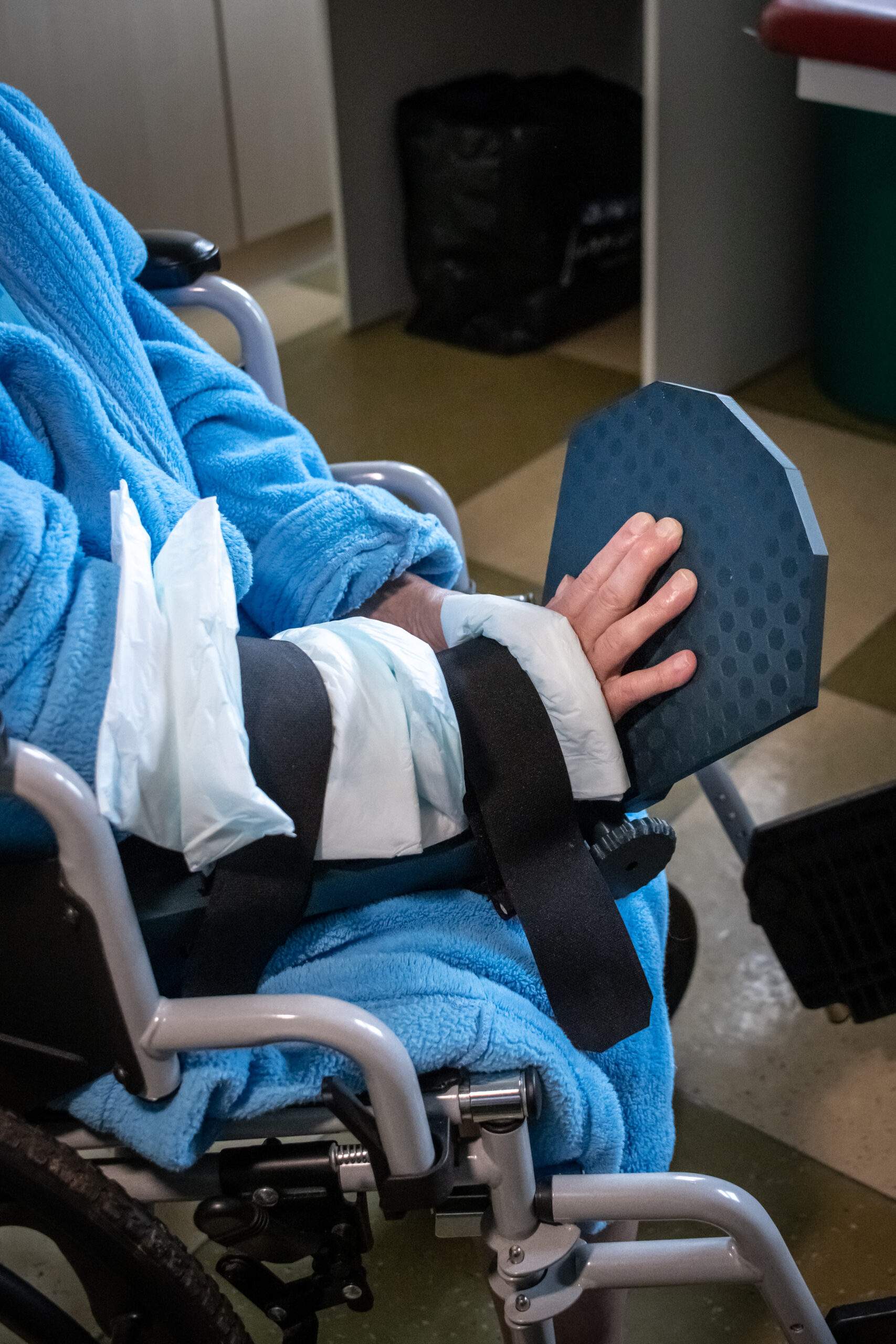
The goal was to create an adjustable splint that would allow the patient's hand to be set in the desired position, safely fixed and left in the stretching position for the required time.
The requirements were quite demanding. The aid had to be sufficiently strong, comfortable and safe for the patient. At the same time, it had to be easy to disinfect, simple for one person to operate and structurally simple enough for the clinic to make further units itself.
It was this combination of requirements that made the project an ideal task for digital fabrication and rapid prototyping.
From the first design to a working prototype
Development took place over several iterations. Different design variants were gradually created, tested directly with physiotherapists and adjusted based on their feedback.
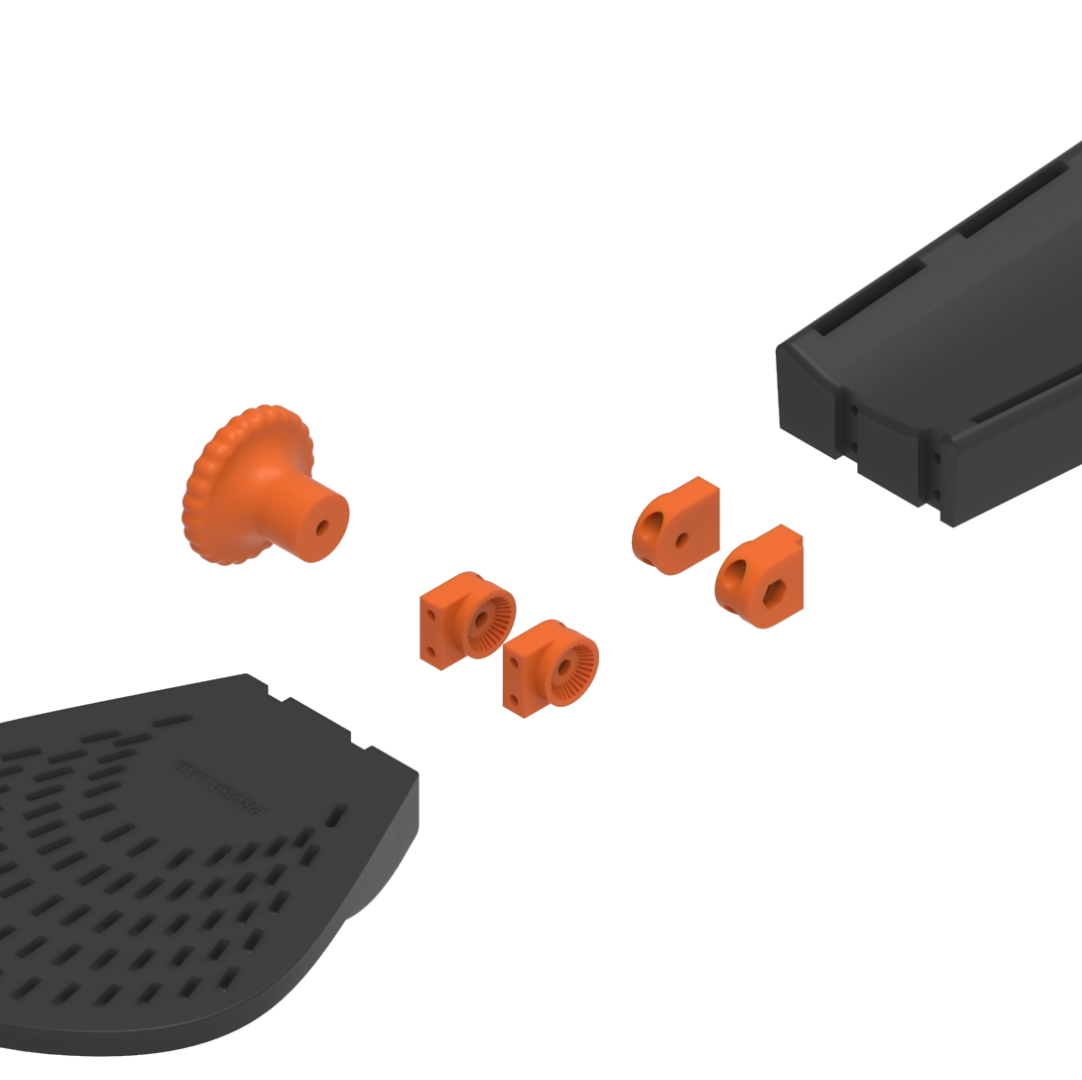
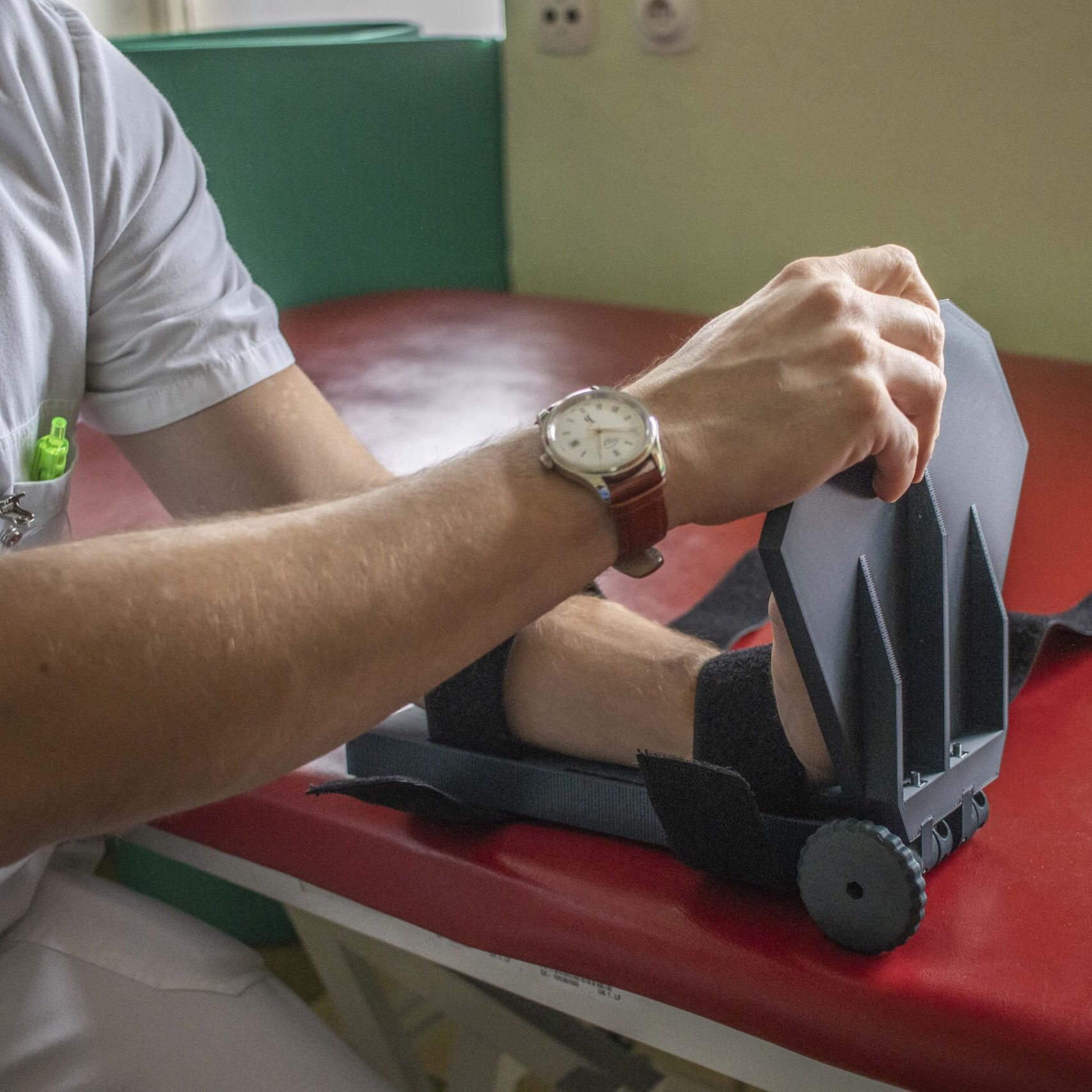
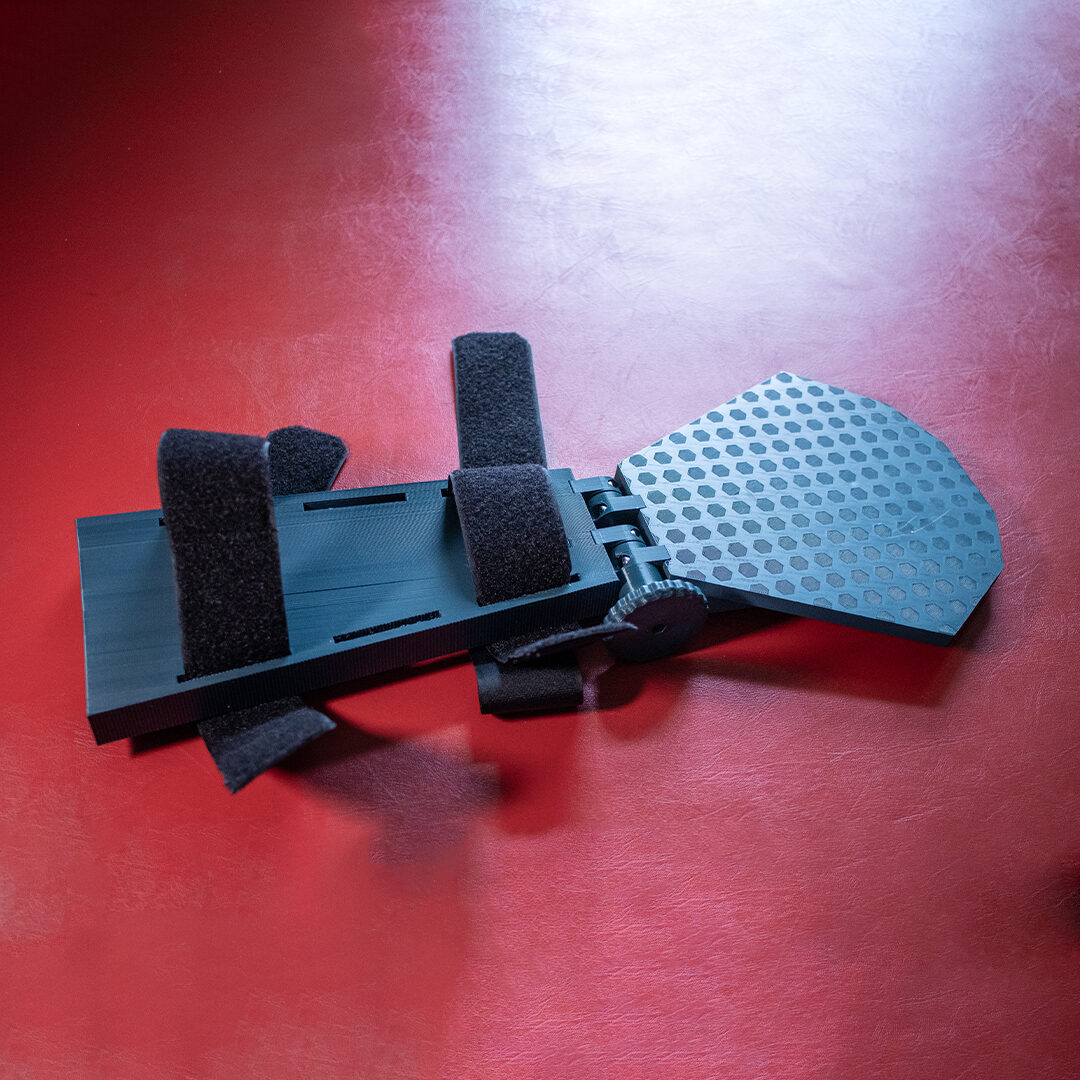
The final splint consists of two main parts. One part holds the patient's forearm, the other supports the palm and fingers. Both parts are connected by an adjustable locking hinge at the wrist.
The physiotherapist can set the desired stretching angle with the left hand and easily lock it with the right hand using a control knob. Thanks to direct contact with the patient, they can also immediately feel the force being applied and safely adapt the therapy to the patient's current condition.
When plastic beats metal
One of the most interesting parts of the development was the locking hinge mechanism.
None of the commonly available catalogue parts met the project's requirements. We therefore designed our own solution, intending to have the final part CNC-machined from metal if needed.
The first prototype was made using FDM 3D printing. It was originally meant only as a test model, but it turned out that its properties fully met the requirements for strength and durability.
Surprisingly, testing showed that some advanced technical materials, such as Prusament PC Blend Carbon Fiber or nylon Prusament PA, were more prone to slipping. In the end, the best results came from a print in ordinary Prusament PLA.
A metal part thus became unnecessary and the final solution remained fully printable.
Designed for sharing
From the very beginning, it was important that the final aid would not be a one-off prototype.
Thanks to 3D printing and commonly available components, the clinic can make further units independently according to the prepared documentation. It does not depend on an external manufacturer or complicated supply chains.
The project is thus an example of the practical use of decentralised manufacturing directly in healthcare.
Result
After twelve weeks of development, we had a working prototype of an adjustable splint that meets the requirements of both physiotherapists and patients. It is light, strong, easy to use, simple to disinfect and affordable to produce.
It is still too early for a long-term clinical evaluation of its impact on patient rehabilitation. As is usual in healthcare, aids like this have to go through a longer period of testing and validation.
The first reactions from experts at the Department of Neurology of the General University Hospital, however, are very positive.
“Working with PrusaLab was very fair and professional from the start. I would really recommend them to anyone dealing with a similar problem,” says Martin Srp, PhD, head physiotherapist of the Department of Neurology and Centre of Clinical Neuroscience of the First Faculty of Medicine, Charles University and General University Hospital in Prague.
For us at PrusaLab, this project is a great example that the biggest benefit does not always come from complex technology. Sometimes all it takes is a simple, well-thought-out solution that saves healthcare workers time and helps patients receive better care.