- Case study
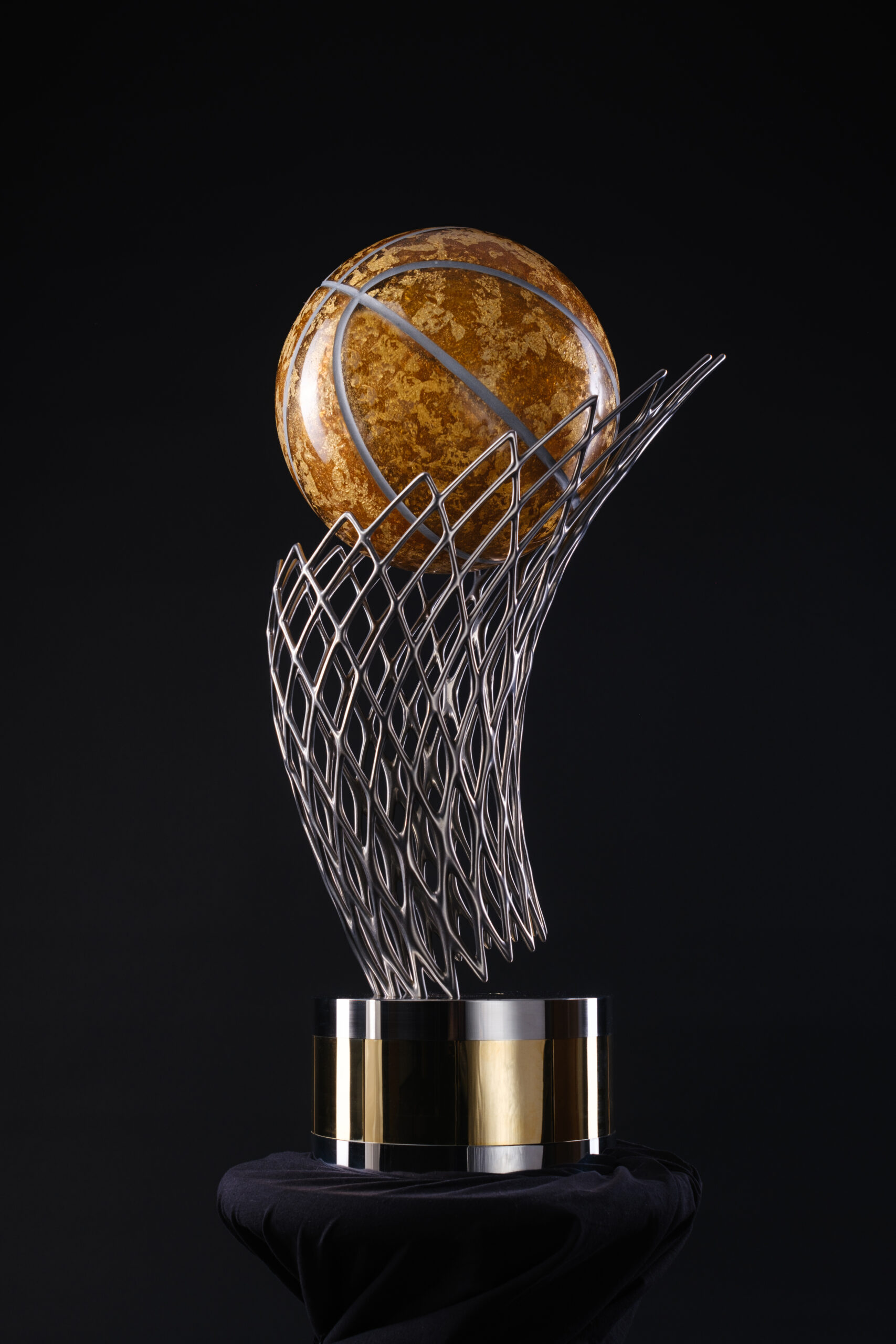
Jiří Zídek Cup: The trophy connecting 100 years of basketball with metal 3D printing
For the Czech Basketball Federation, we helped create a new travelling trophy for the winners of the Kooperativa NBL. Named after Jiří Zídek Sr., the object was conceived as a tribute to Czech basketball, but also as a showcase of where contemporary design, parametric modelling and metal additive manufacturing can go.
Customer
Czech Basketball Federation
Region
sport, marketing and PR
Year
2023 – 2024
Turnaround time
12 months

A brief that reaches beyond sport
The Czech Basketball Federation was looking for a new travelling trophy for the winners of the Kooperativa NBL. It was not meant to be just a prestigious cup, but an object that would commemorate 100 years of basketball in Bohemia, bear the name of Jiří Zídek Sr. and at the same time show where contemporary design and manufacturing can go.

A design created for 3D printing
The trophy was designed by architect and designer Petr Vacek, who created it using parametric modelling. This made it possible to search for a shape that would be visually striking, technically feasible and at the same time make natural use of the possibilities of metal 3D printing.
Combining technology and craftsmanship
Making the trophy brought together several manufacturing processes. The metal parts of the net and the ball were made by SLM 3D printing from stainless steel, while other parts were CNC machined, welded, ground and surface finished. PrusaLab took care of the assembly, prototyping, jigs and the resin parts containing fragments of almost 24-carat gold.
A trophy for the next ten seasons
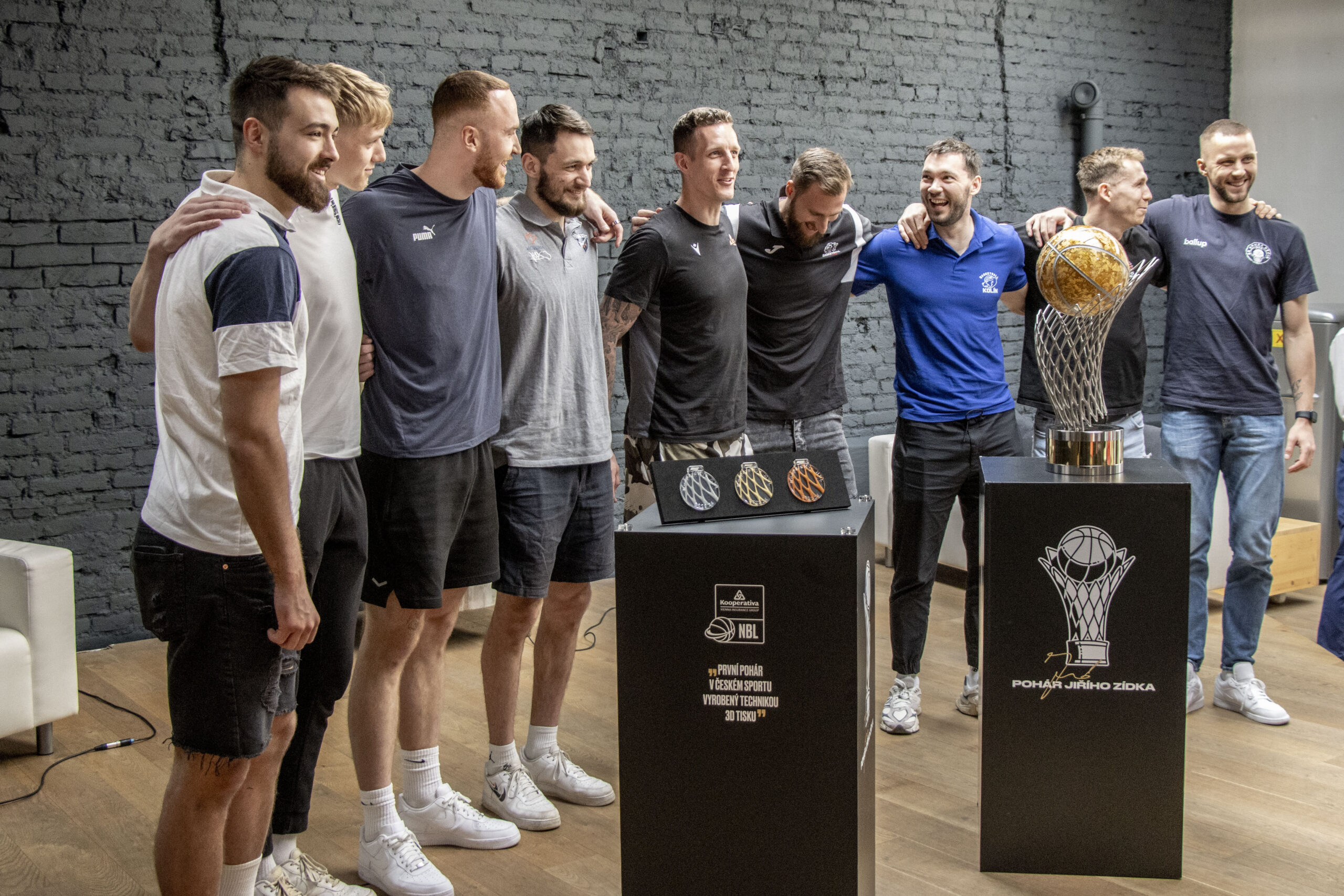
The result is a 63 cm tall travelling trophy weighing 15 kg, which teams will compete for over the next ten seasons of the National Basketball League. The object connects sporting history, technological innovation and a tribute to one of the greatest figures of Czech basketball.
A project that reaches beyond sport
Creating a new travelling trophy for the winners of the Kooperativa National Basketball League was not just a manufacturing commission. The aim was to create an object that would represent the top Czech basketball competition with dignity, commemorate 100 years of organised basketball in Bohemia and pay tribute to Jiří Zídek Sr., one of the greatest figures of Czechoslovak basketball.
The trophy was to serve the winners of the next ten NBL seasons, so from the very beginning it was important that it would hold up not only as a sports award, but also as a lasting representative object. The brief therefore combined several layers at once: history, symbolism, contemporary design, advanced manufacturing technologies and collaboration between experts from different fields.
A design created specifically for metal 3D printing
The design is the work of architect and designer Petr Vacek, who designed the trophy using parametric modelling in Rhino Grasshopper. This design approach makes it possible to work with form as a system of relationships and parameters. Thanks to this, it was possible to gradually search for a structure that would be visually striking, technologically feasible and at the same time make natural use of the possibilities of metal 3D printing.
The parametric approach played an important role in the development. With such a complex object, the goal is not only to create an eye-catching shape, but also to find a solution with the right proportions and sufficient strength that can be divided into manufacturable parts. The trophy was therefore not created as an ordinary cup with an added 3D printed element, but as an object designed from the outset with the specifics of additive manufacturing in mind.
Metal printing at CXI TUL
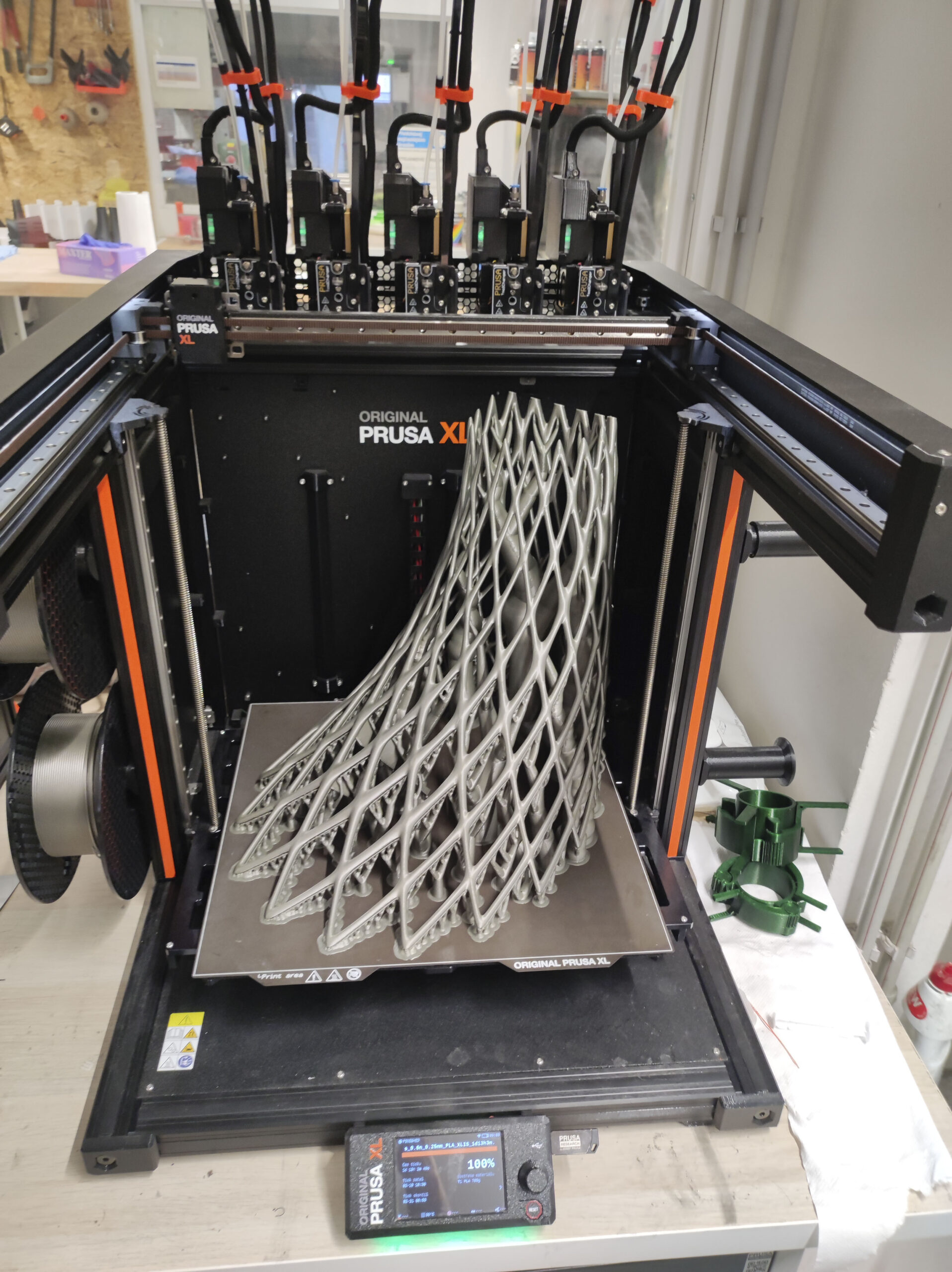
The metal parts of the net and the frame of the ball were produced by the Institute for Nanomaterials, Advanced Technologies and Innovation of the Technical University of Liberec, specifically the CXI TUL research centre. The parts were printed using SLM (Selective Laser Melting) technology, in which a laser gradually fuses layers of metal powder to create a part with mechanical properties comparable to a machined metal component.
In this case, the parts were printed from 17-4PH stainless steel powder. The net was printed as seven separate parts and the ball structure as eighteen. Dividing it into multiple parts was necessary because of manufacturing limitations as well as the subsequent assembly. Metal 3D printing was not just an eye-catching technological element here, but the key manufacturing process that made it possible to produce a geometry that would be very difficult or practically impossible to achieve with conventional methods.
Assembly at PrusaLab
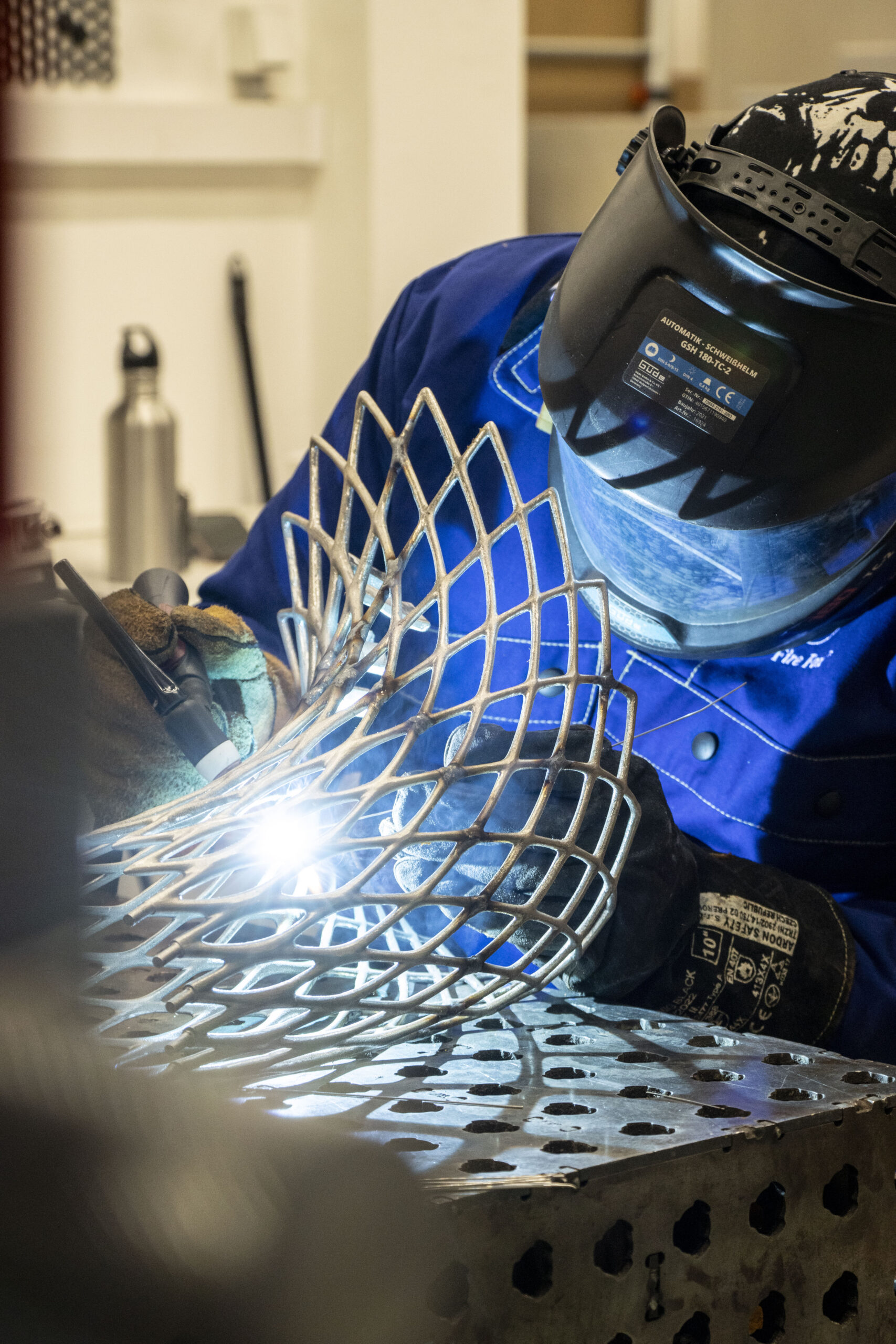
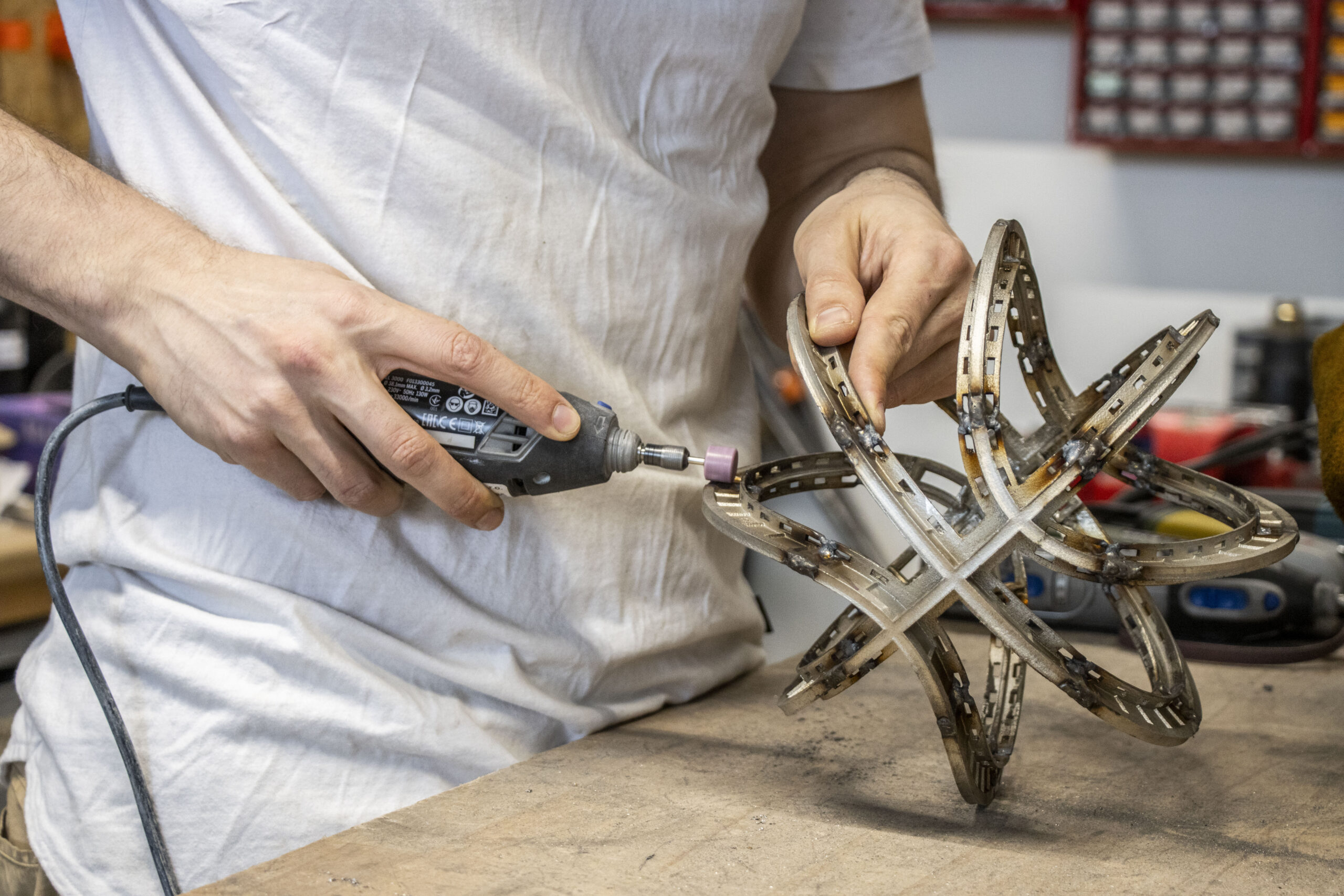
Once the metal parts were printed, a demanding assembly process followed at PrusaLab. The individual parts of the net and the ball had to be TIG welded, the welds ground down and the surface then finished by tumbling. The resulting object thus combines the precision of advanced additive manufacturing with the manual work needed to perfect the details and the final appearance.
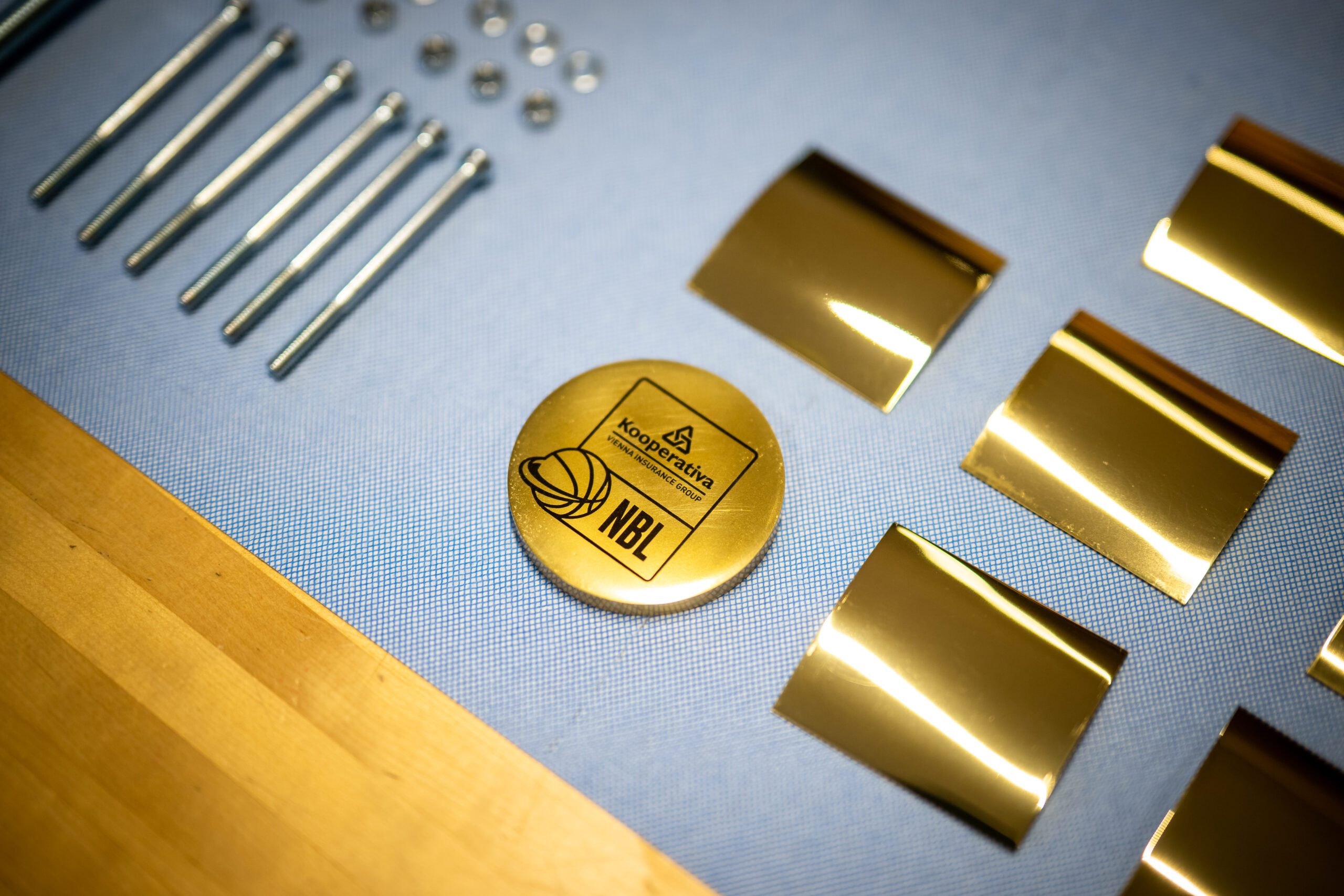
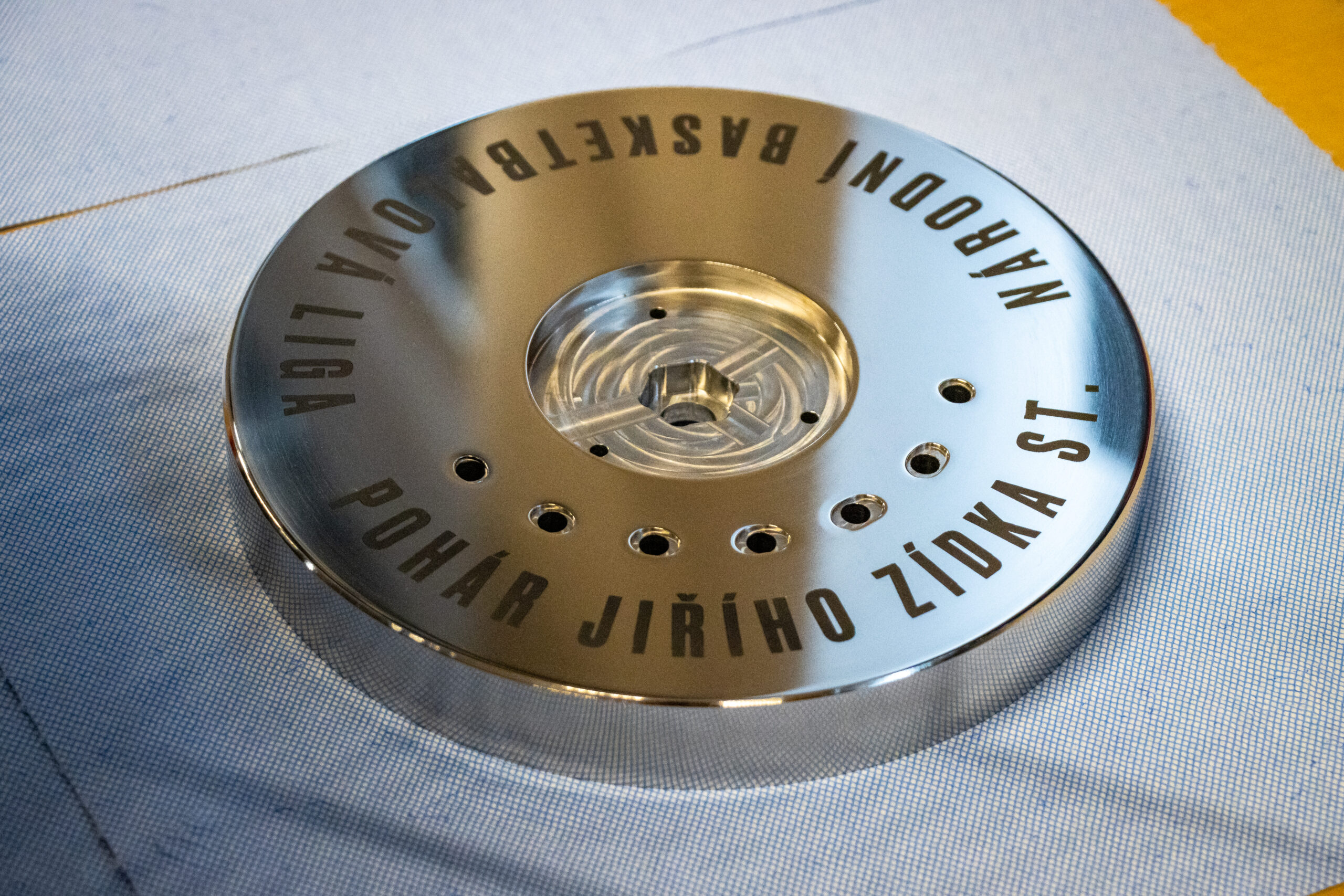
PrusaLab also handled other parts of the trophy. The main structure of the base was made mainly by CNC machining from stainless steel. The base also includes brass elements, including laser-engraved plaques to which the names of the winners of each season will be added over the coming years.
FDM printing as an invisible part of the process
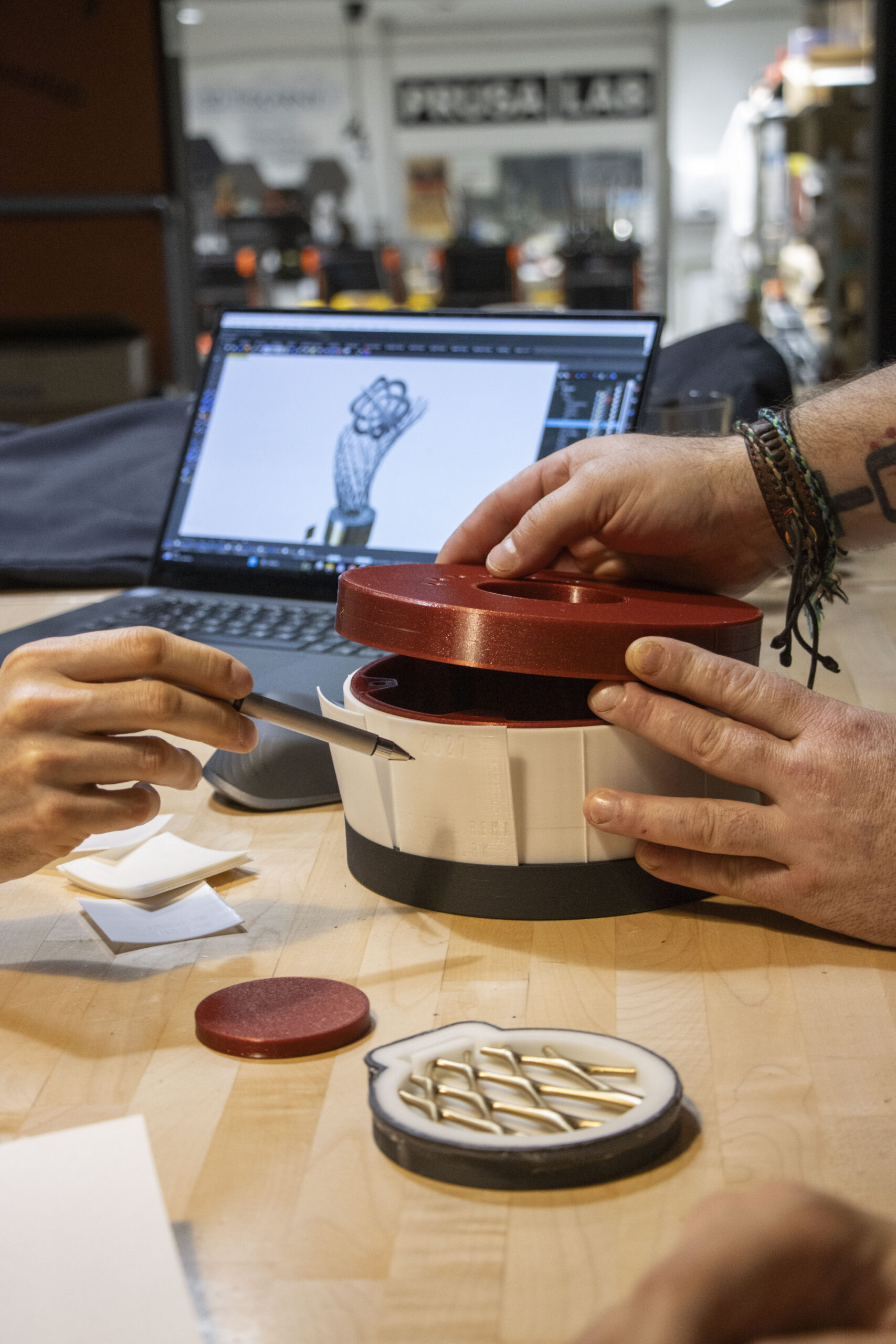
Although metal 3D printing is the dominant element of the trophy, FDM technology, i.e. conventional 3D printing from thermoplastics, also played a significant role. It was used mainly for prototyping and production preparation. At PrusaLab, we made mock-ups of parts to verify both appearance and function, assembly jigs for putting the individual parts together, and patterns for making silicone moulds.
These supporting steps are often less visible than the final object, but they are essential for a successful result. They make it possible to test variants quickly, simplify assembly and prepare the subsequent manufacturing processes. The project shows well that 3D printing does not have to be just a final production technology, but also a practical tool throughout the entire development and production chain.
Resin, gold and the detail of the ball
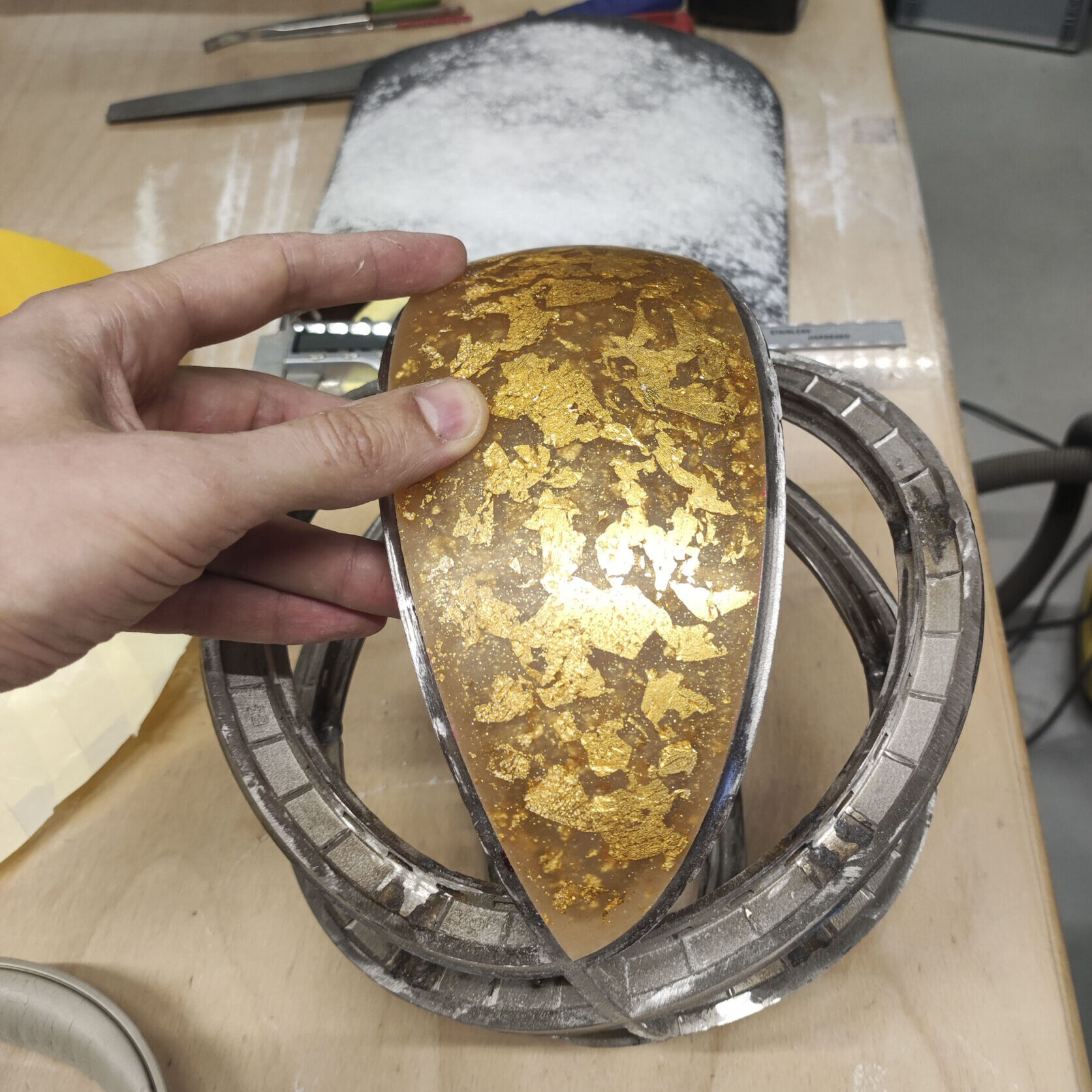
One of the most striking elements of the trophy is the basketball with its transparent shell. These parts were cast in silicone moulds and contain fragments of almost 24-carat gold. The combination of the metal structure, transparent resin and gold elements gives the trophy a ceremonial character and underlines the impression of an exceptional award.
The resin parts not only had to be cast, but also sanded to the required shape so that they fitted the ball structure precisely. Here too, digital design, precise manufacturing, hand finishing and attention to detail come together.
A tribute to Jiří Zídek Sr.
The trophy bears the name of Jiří Zídek Sr., a legendary Czech basketball player and one of the most important figures in the history of Czech basketball. The symbolic dimension of the project is further underlined by a piece of his jersey with the number 10 placed inside the trophy.
This means the cup is not only an award for the current winners of the competition, but also a reminder of a personality who had a major influence on Czechoslovak basketball. The project thus connects today's teams, the history of the competition and the legacy of the player whose name the trophy will carry in the years to come.
Result
The result of more than a year of work is a 63-centimetre tall, 15-kilogram travelling trophy that will be presented to the winners of the Kooperativa NBL over the next ten seasons. It combines sporting tradition, parametric design, metal 3D printing, CNC machining, FDM prototyping, hand assembly and detailed surface finishing.
The project shows how PrusaLab can connect different worlds: sport, design, research, additive manufacturing and craftsmanship. The trophy is therefore not only a symbol of victory in the top Czech basketball competition, but also an example of where contemporary manufacturing can go when it is designed from the outset with the technology, the material and the story the final object is meant to carry in mind.