- Case study
Haptic models: How 3D printing has expanded the world of children's books for the blind
How to bring illustrations, which a typical reader simply looks at, closer to children with visual impairments? In cooperation with children's book author Markéta Vítková and with the support of the Vodafone Foundation Laboratory, we have created a set of 3D-printed haptic models inspired by her books. The project demonstrated not only the possibilities of 3D printing, but also the importance of testing directly with the people whom the resulting aids are intended to serve.
Customer
Markéta Vítková, Vodafone Foundation Laboratory
Region
education, accessibility
Year
2022
Result
freely available collection of haptic models on Printables.com
When a picture is not enough to describe in words
Tactile books allow blind children to perceive illustrations through reliefs and various materials. However, their production is demanding, expensive and difficult to scale. Therefore, the project looked for a way to extend the book experience using digital manufacturing.
From relief to standalone objects
The original intention was to print relief illustrations directly on a 3D printer. However, testing showed that the individual print layers disrupt the smoothness of the shapes and can be distracting when reading by touch. The solution turned out to be fully realised spatial objects.
Verified by blind users
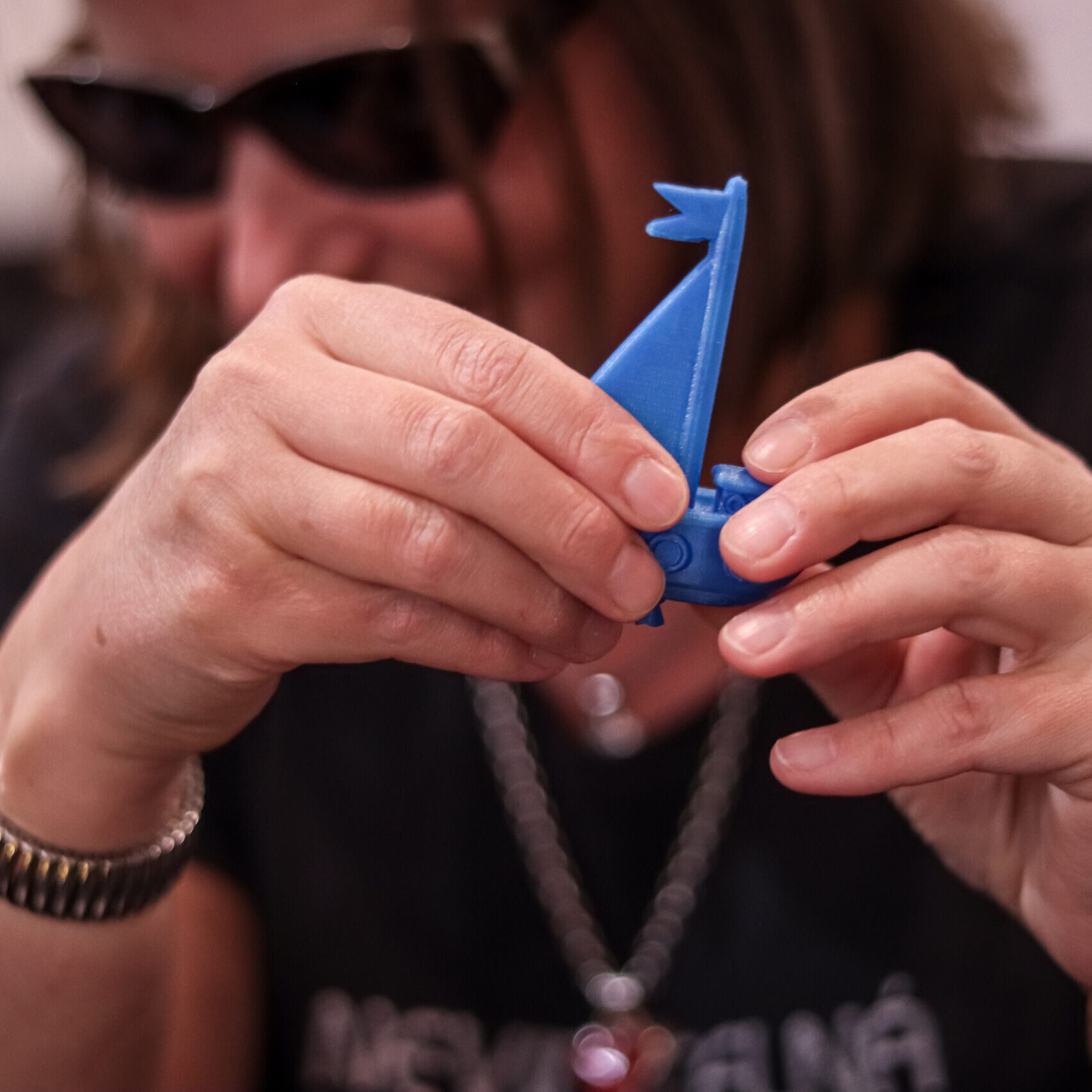
We didn't just test the models technically. The entire collection was evaluated by blind guides from the Invisible Exhibition in Prague, who checked their safety, clarity and appropriate level of detail.
Models available to the entire community
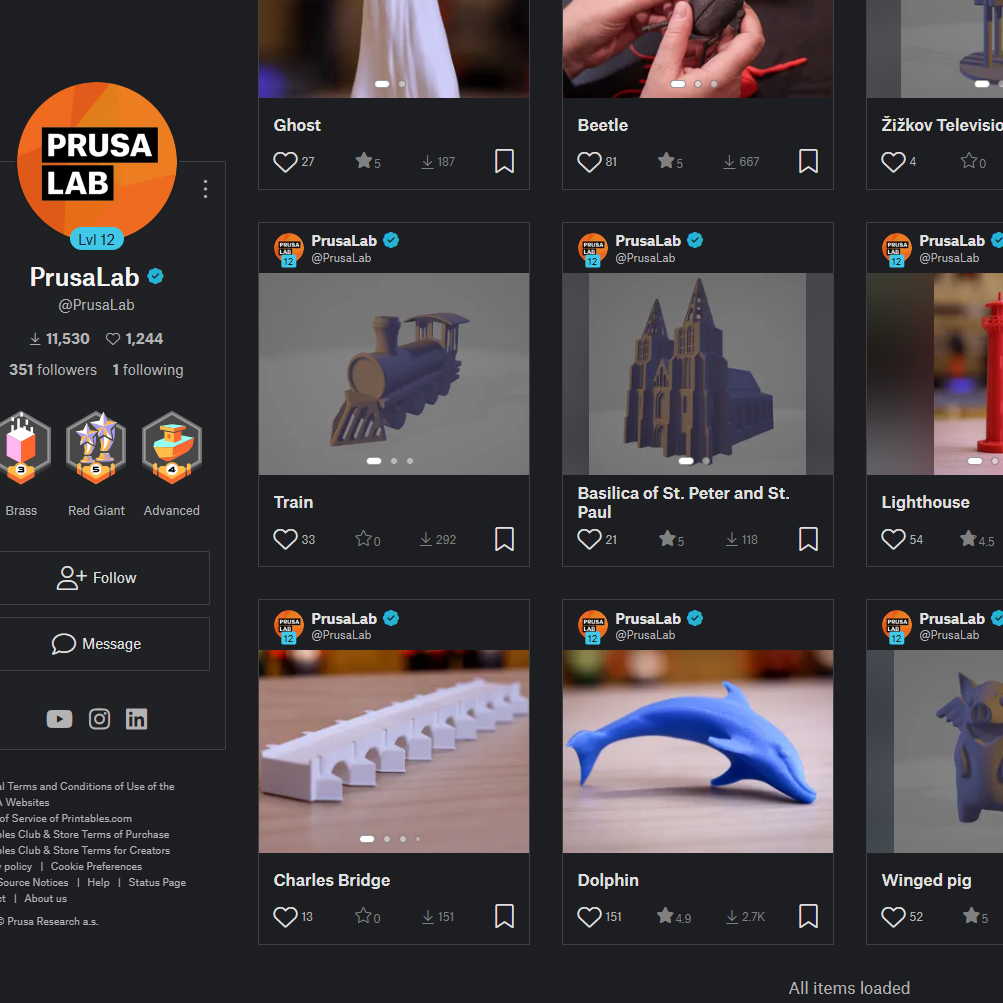
We have published the completed files on the Printables.com platform. This allows families, schools, libraries and members of the 3D printing community to print them and help make them accessible to people who do not own a printer.
How to make illustrations accessible to blind children
Books for blind and partially sighted readers have existed for a long time, but their production is significantly more complex than that of standard publications. The text itself can be translated into Braille, but a much greater problem arises with illustrations.
Haptic books therefore often combine different materials, structures and shapes to best mimic the real properties of the depicted objects through touch. Materials such as textile, paper, wood or plastics are used, for example. The resulting illustrations can be very impressive and easy to understand, but their production is based on time-consuming manual labour.
The costs per title can thus be many times higher than its retail price, and most such books are only produced in small print runs with the help of subsidies. Compared to standard literature, the range of titles for visually impaired readers is therefore very limited.
Children's book author Markéta Vítková decided to find a way to offer children more options. Together with the Vodafone Foundation Laboratory, which supported the project, she turned to PrusaLab with the question of whether part of the production could be simplified using 3D printing.
Experiment with reliefs and a change of direction
The first idea was to print the illustrations directly in the form of embossed images. This process would eliminate the need to produce a master plate, which is used in standard production for thermoforming plastic sheeting. It would also dispense with part of the manual processing.
We therefore created several test reliefs and began verifying their usability. Soon, however, it became apparent that the main obstacle is the very layers typical of FDM 3D printing. Visually they may not be prominent, but when running fingers over them, they disrupt the smooth, rounded shapes and create information that is unrelated to the original illustration.
Even variable layer height failed to completely eliminate this effect. Subsequent filling, sanding or chemical smoothing would, in turn, make the whole process significantly more expensive and practically remove the advantage that 3D printing was originally meant to bring.
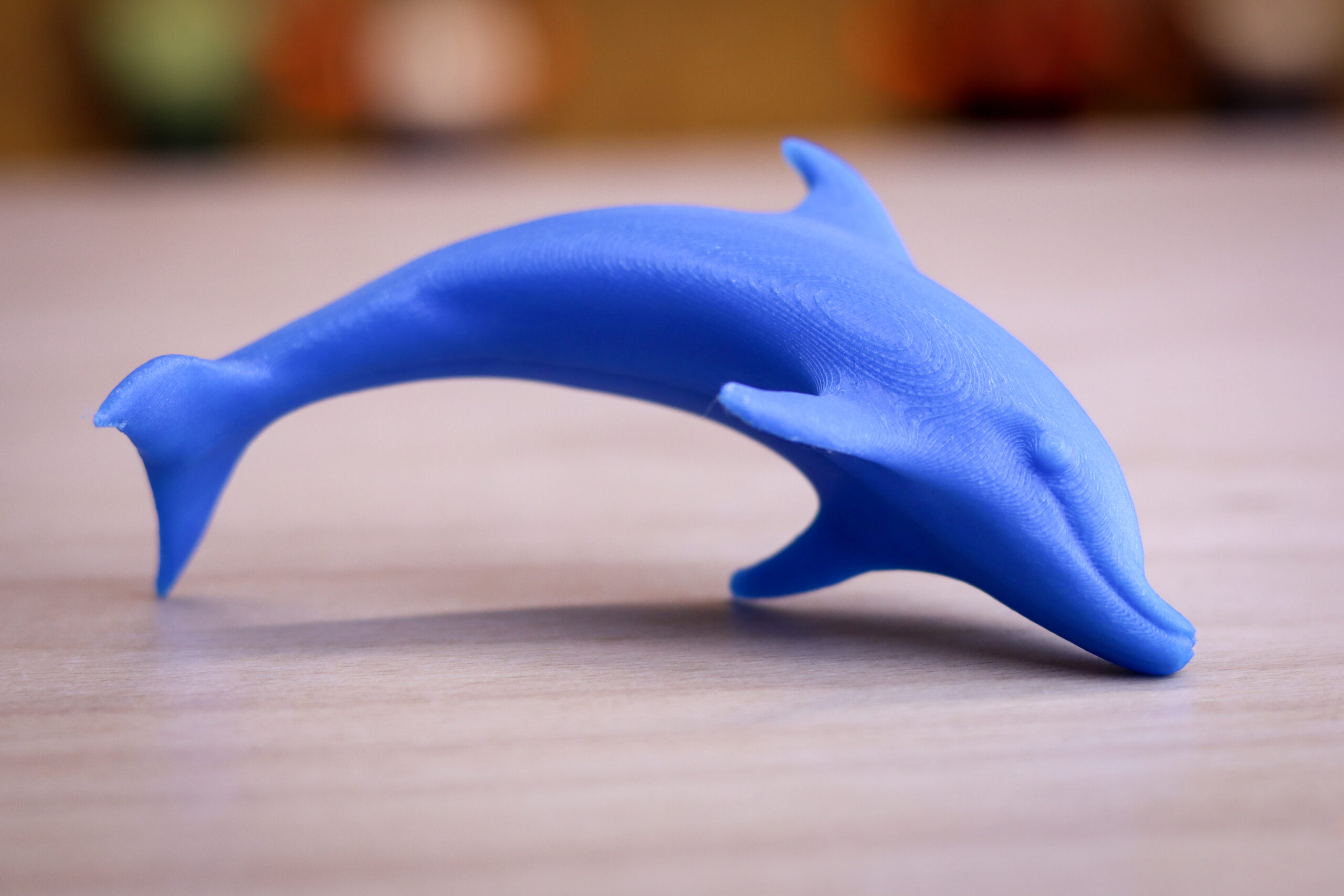
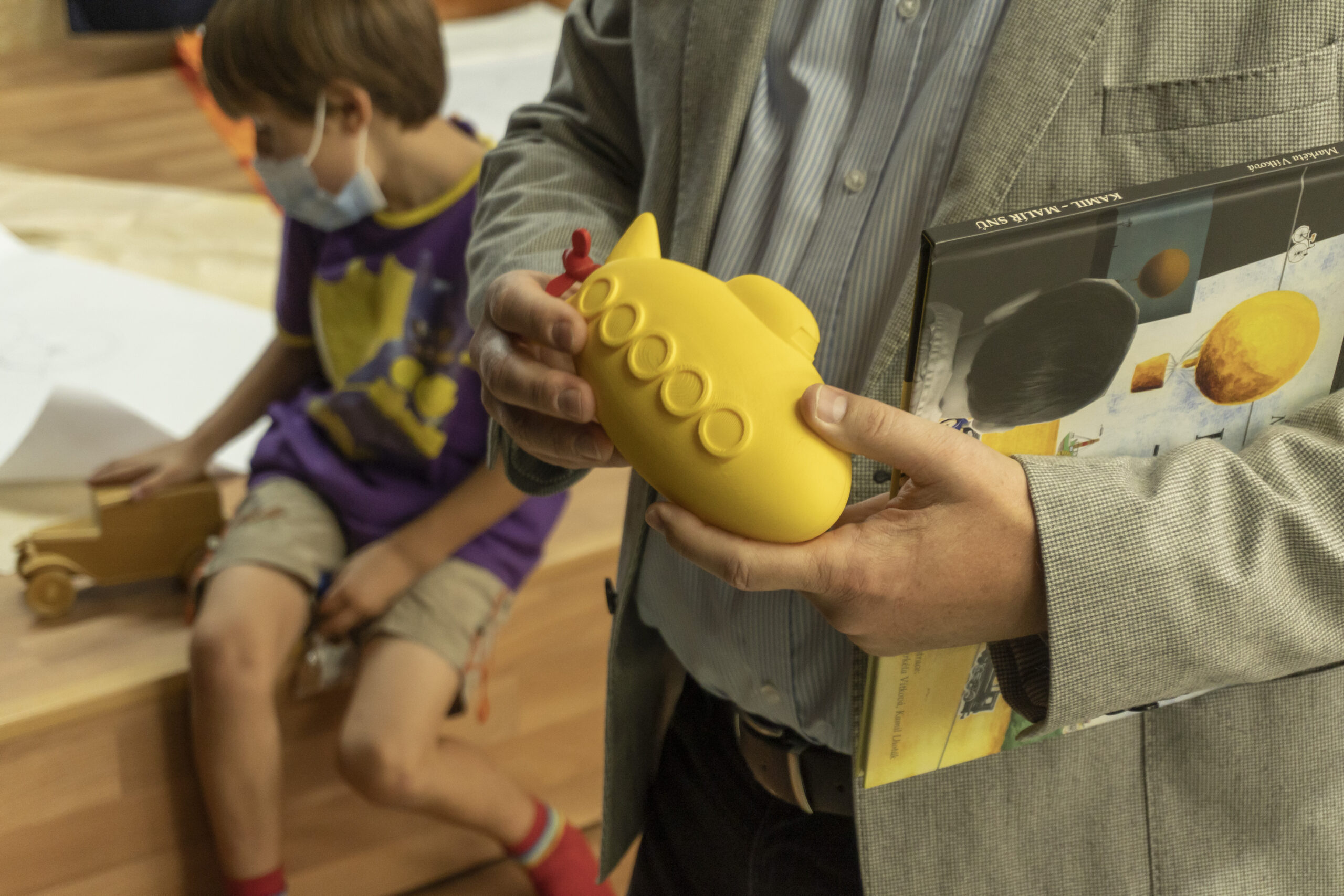
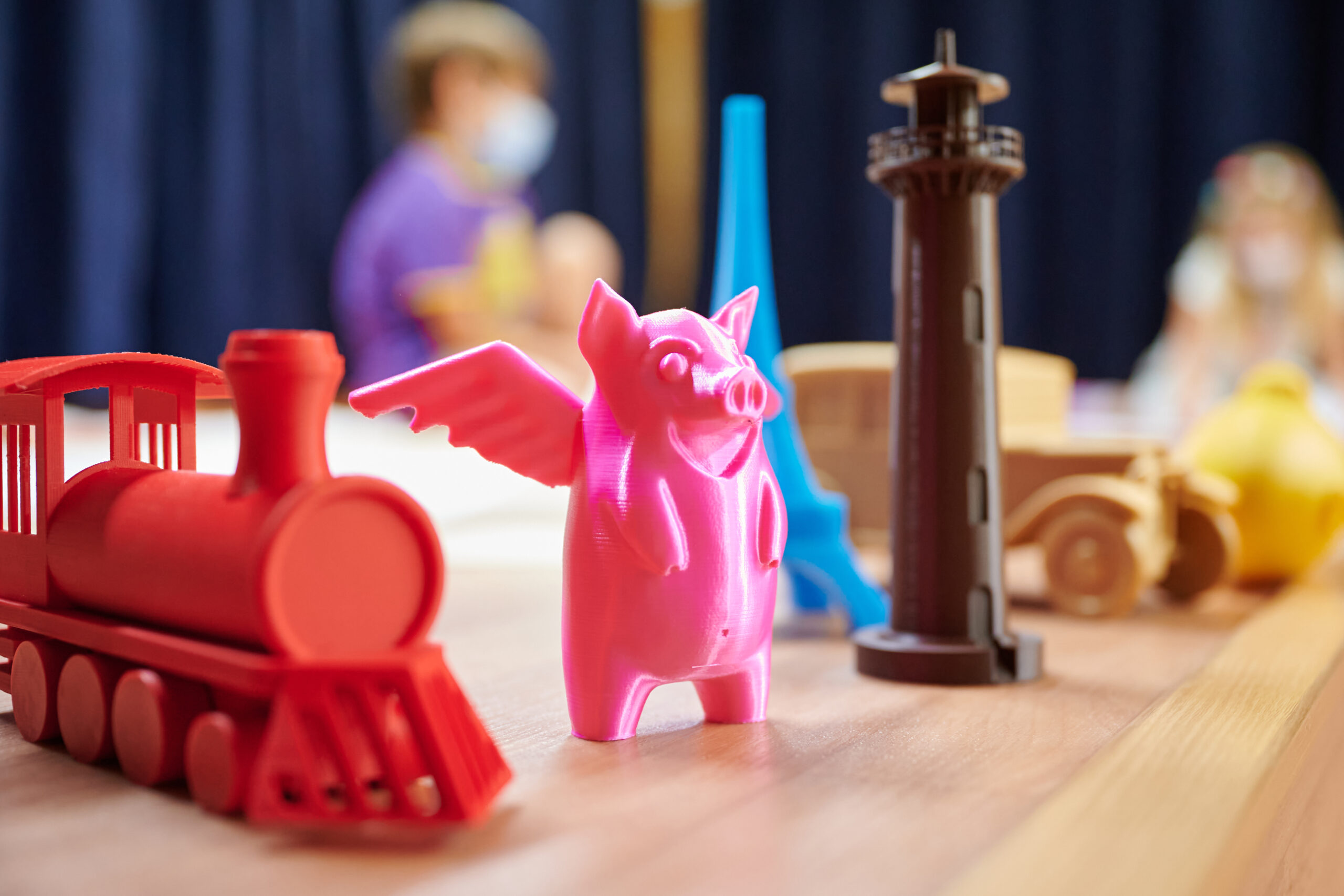
Instead of trying to mimic classic embossed pages, we therefore changed the whole concept. We decided to create standalone spatial objects inspired by illustrations from Markéta's books. These can offer a much more realistic idea of the object's shape and are not limited by the surface of a book page.
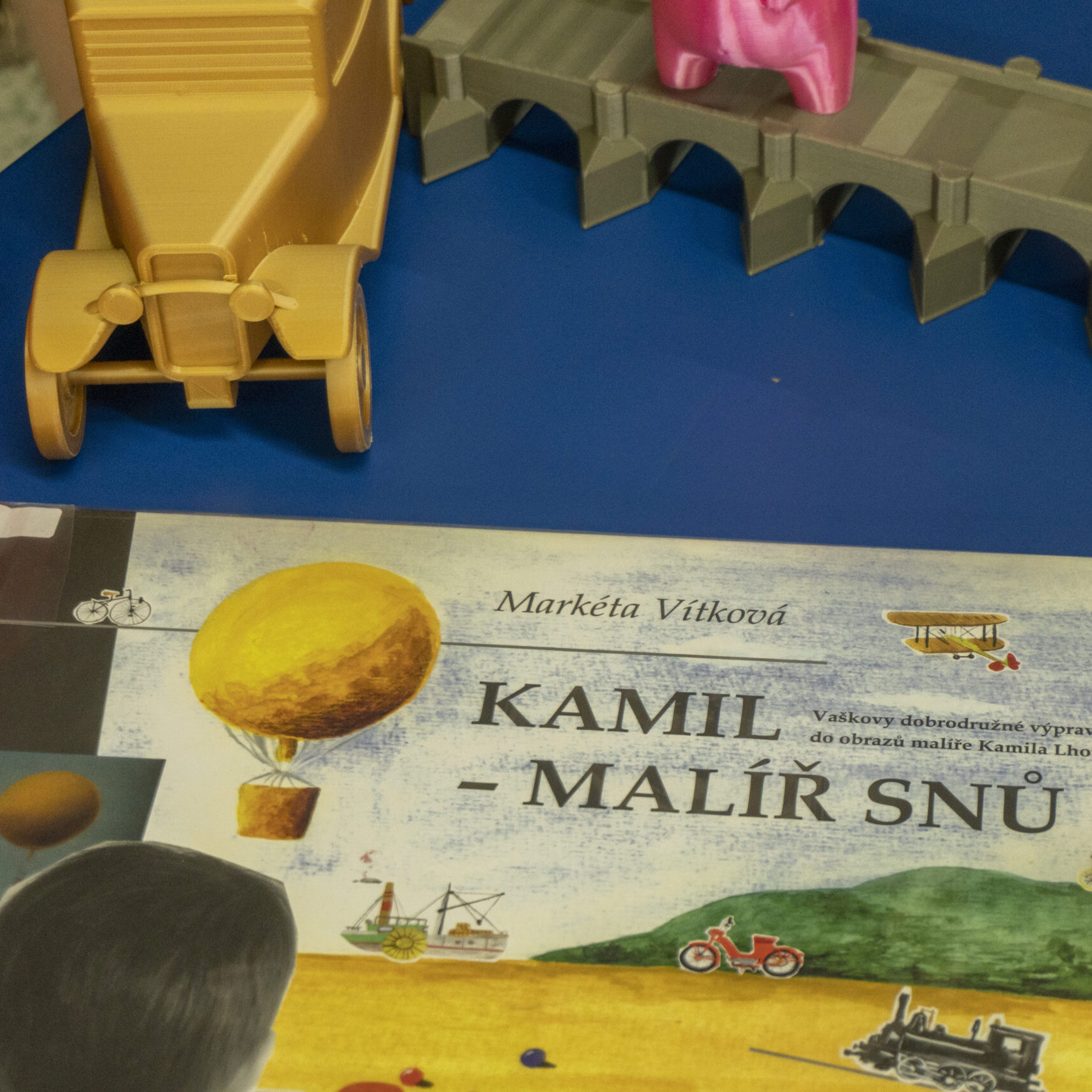
The book Kamil – malíř snů (Kamil – Painter of Dreams) inspired, for example, models of Charles Bridge, a lighthouse, a vintage car and a pig with wings. Another collection was then based on the book Překvapení skřítka Modrovouska (The Surprise of Modrovousek the Goblin).
The models were designed to clearly emphasise the basic shapes and characteristic features of the original. Conversely, minor details that would be distracting during tactile perception needed to be simplified or removed entirely.
Testing, sharing and other potential uses
A correctly printed model does not automatically mean a suitable haptic aid. A visually impaired person perceives an object differently than a sighted modeller, who knows its original and can make up for missing information visually.
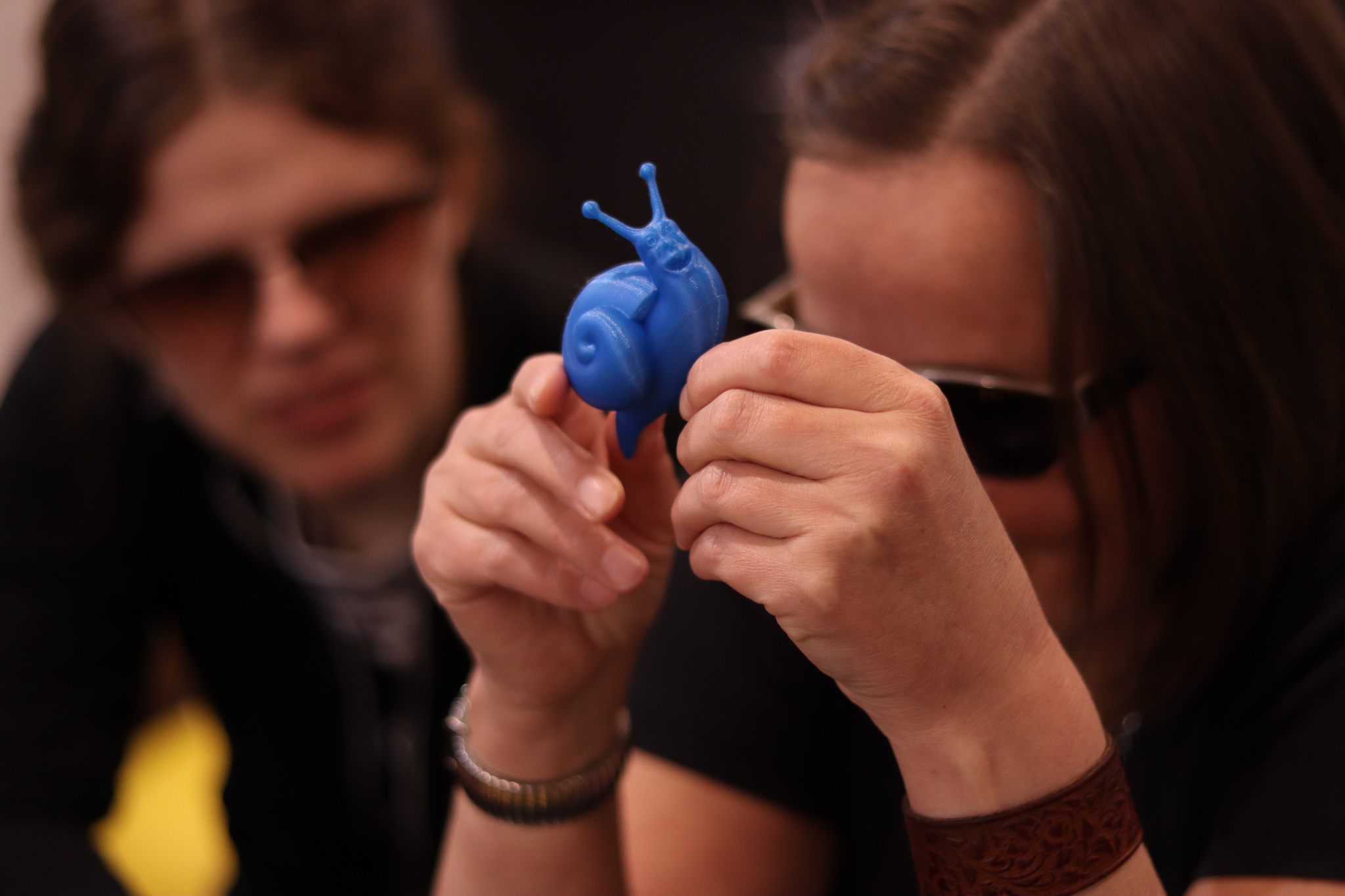
We therefore presented the entire collection to blind guides from the Invisible Exhibition in Prague. They examined the models one by one and provided us with feedback on their safety, readability and overall comprehensibility. Only after their approval did we publish the files on the Printables.com platform.
For production, we chose Prusament PLA, which offers good printability and allows for easy reproduction on standard home printers. The models were designed to be as simple as possible, although for some it was not completely possible to avoid print supports or splitting into multiple parts with subsequent gluing.
Releasing the models for free solves only part of the problem. Not every user, family or institution has its own 3D printer. This is exactly where the community of local 3D printing enthusiasts, schools, libraries and makerspaces can play an important role.
As well as a model database, Printables.com also offers community features and a user map. This makes it possible to connect people who need a model with those who can print it locally. Several sets can be produced for a library, school or community centre, for example, and then circulated among users.
A similar principle can be used outside of children's books. Cultural institutions can work with schools to prepare haptic models of monuments and architecture. Objects that a person cannot easily touch in everyday life because they are too small, too large, dangerous, or entirely fictional also hold great potential.
Another distinct area could be models of human figures in specific poses. A blind person cannot simply watch an instructor's movement, but a spatial model can help them understand, for example, a specific yoga pose or sports movement.
Result
The result of the project is a collection of freely available haptic models that expands the experience of Markéta Vítková's books while also functioning independently as an educational tool or toy.
The project also demonstrated the limits of the technology. Direct 3D printing of relief illustrations proved unsuccessful due to the layer structure, but a change in approach opened up a new path in the form of full-fledged spatial objects.
The most important part of the whole process was verifying the models directly with visually impaired users. Thanks to their experience, it was possible to create objects that are not only visually attractive, but above all safe, clear and understandable through touch.
In this case, 3D printing does not replace traditional tactile books. However, it offers an accessible extension that can be easily shared, modified, and produced locally according to the needs of specific readers, schools, or libraries.