- Case study
3D printed support structure for restoring a sculpture by Zdeněk Pešánek
How do you safely reinforce a sculpture almost ninety years old without the structure damaging its intricate surface or getting in the restorers' way? For the National Gallery Prague, we used a 3D scan to design and make a lightweight support jig that precisely follows the shape of the work. Thanks to 3D printing, the structure could be adjusted quickly, the necessary part reprinted within a few days, and a solution prepared for safe handling during restoration.
Customer
National Gallery Prague
Region
Restoration, heritage conservation
Year
2021
Turnaround time
65 hours of production
A structure designed for a single work of art
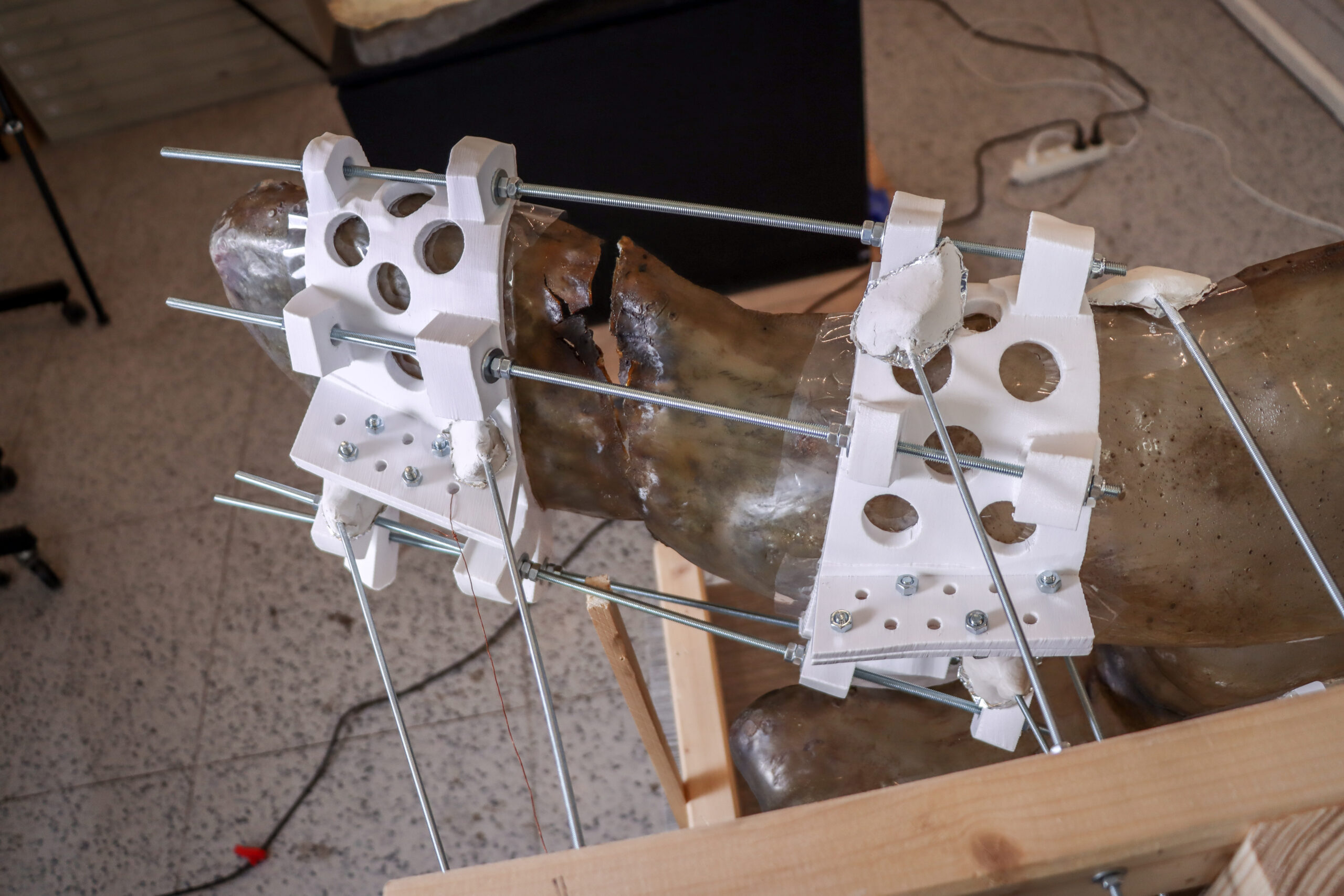
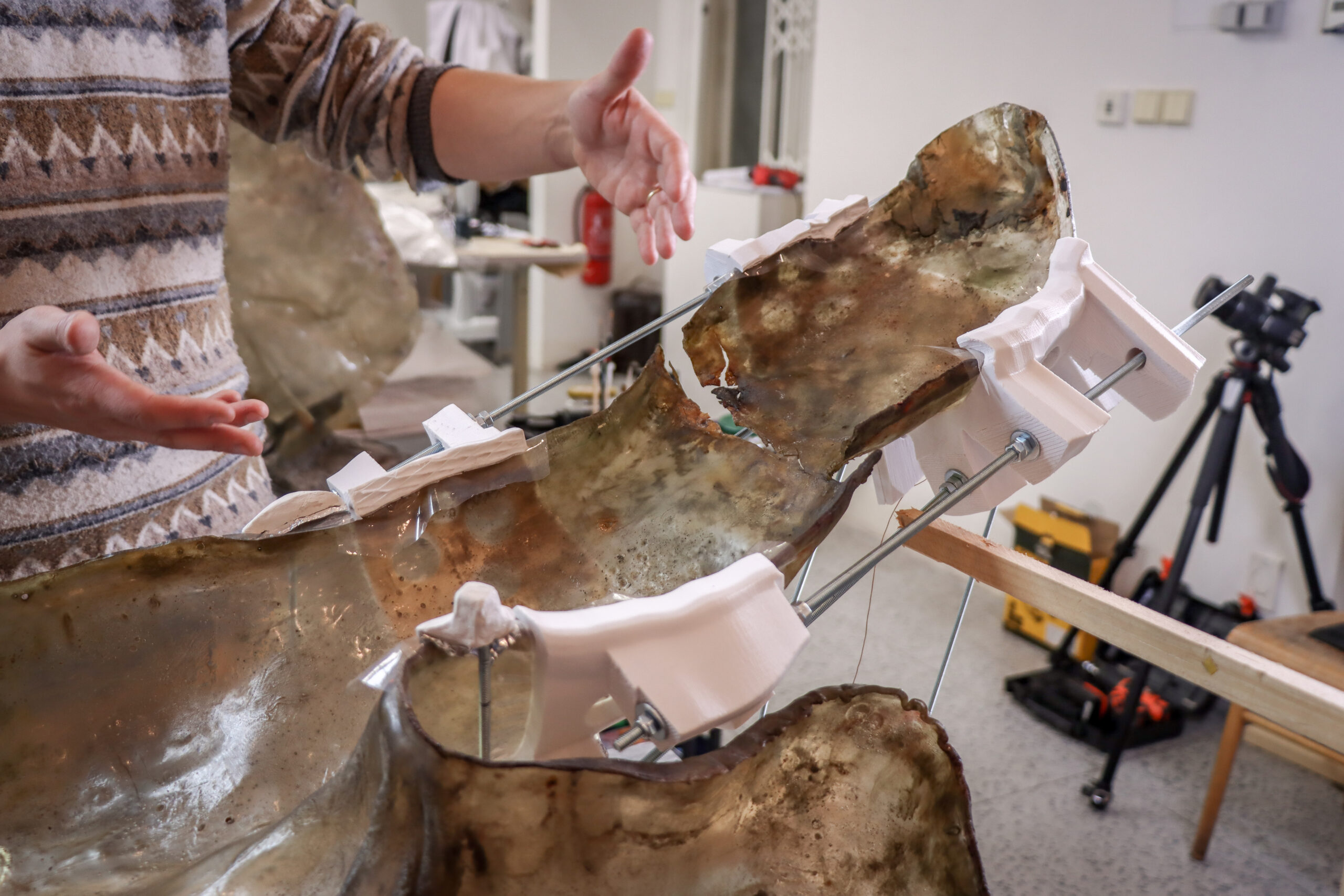
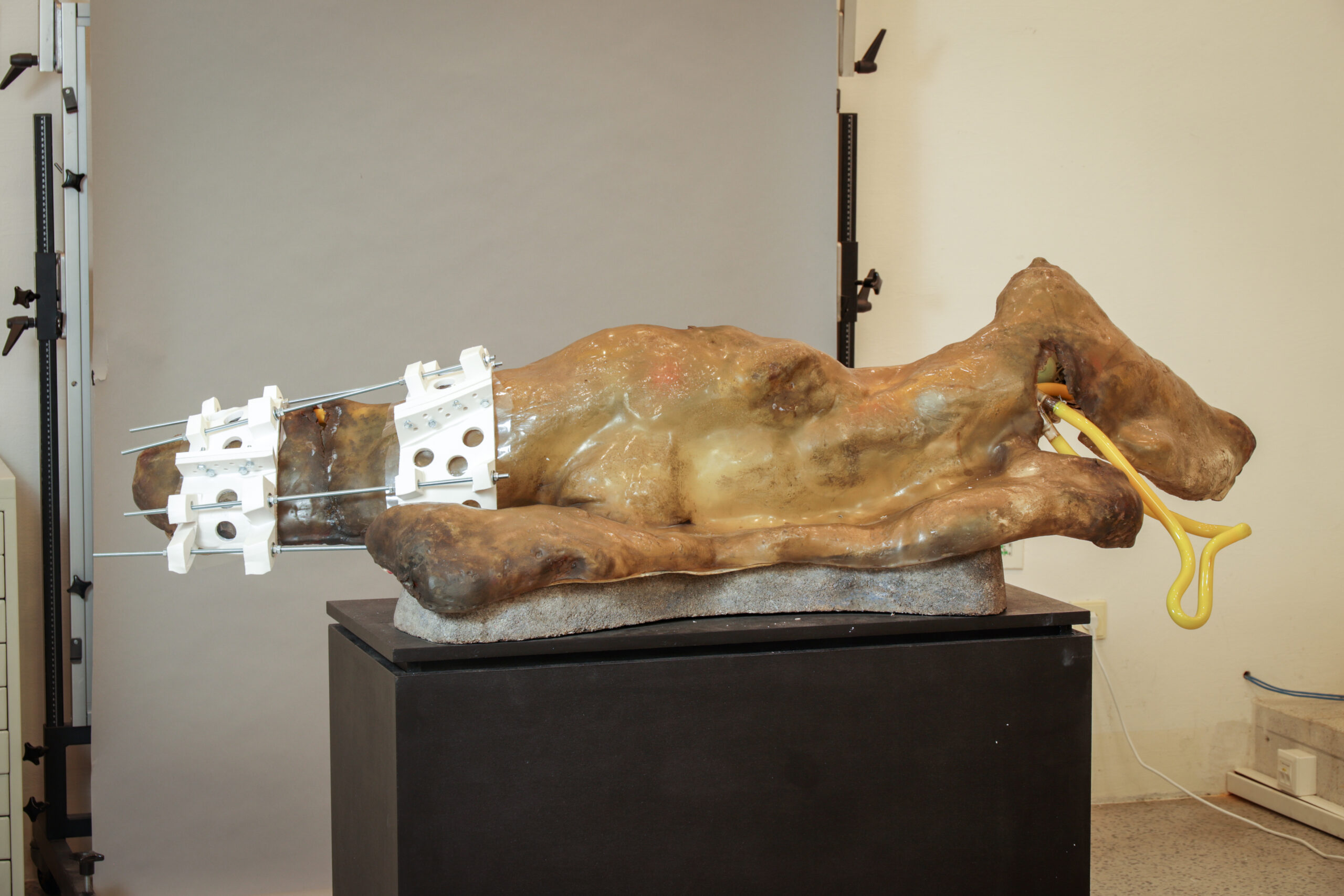
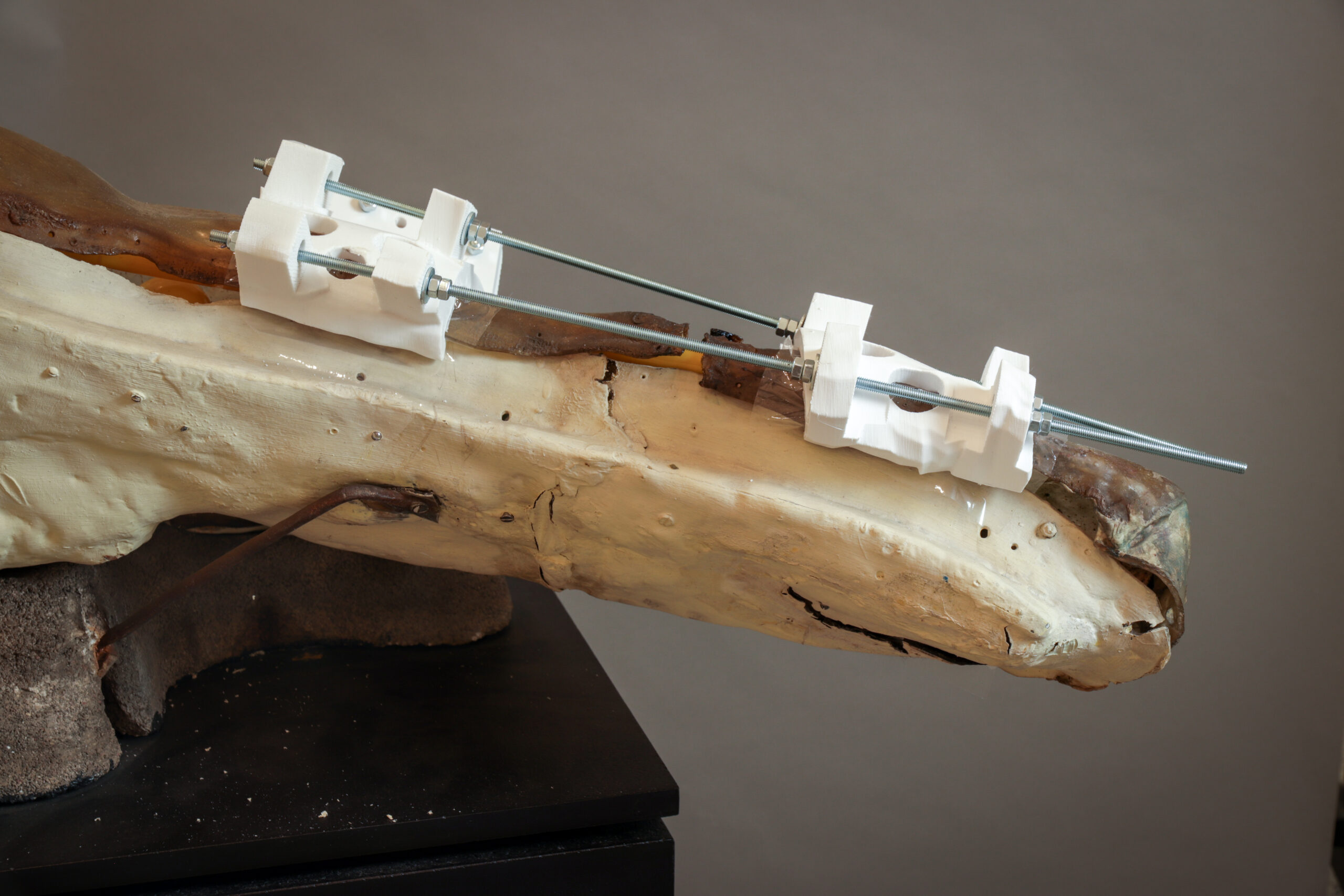
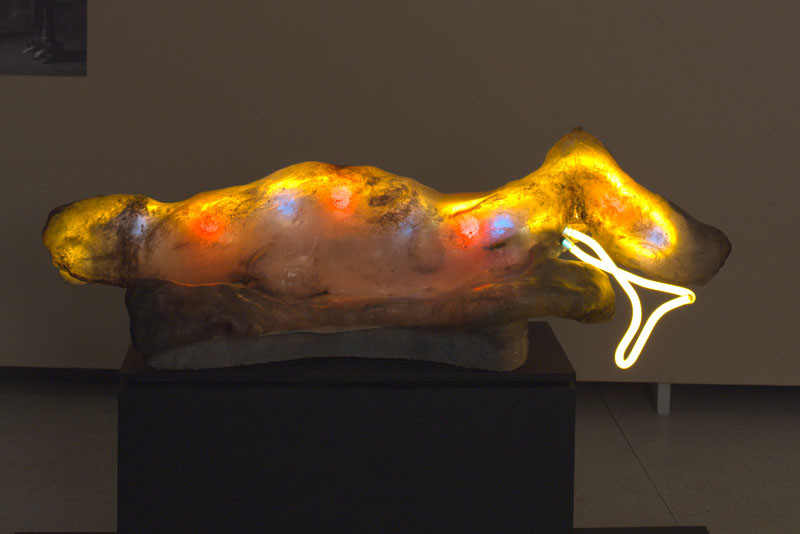
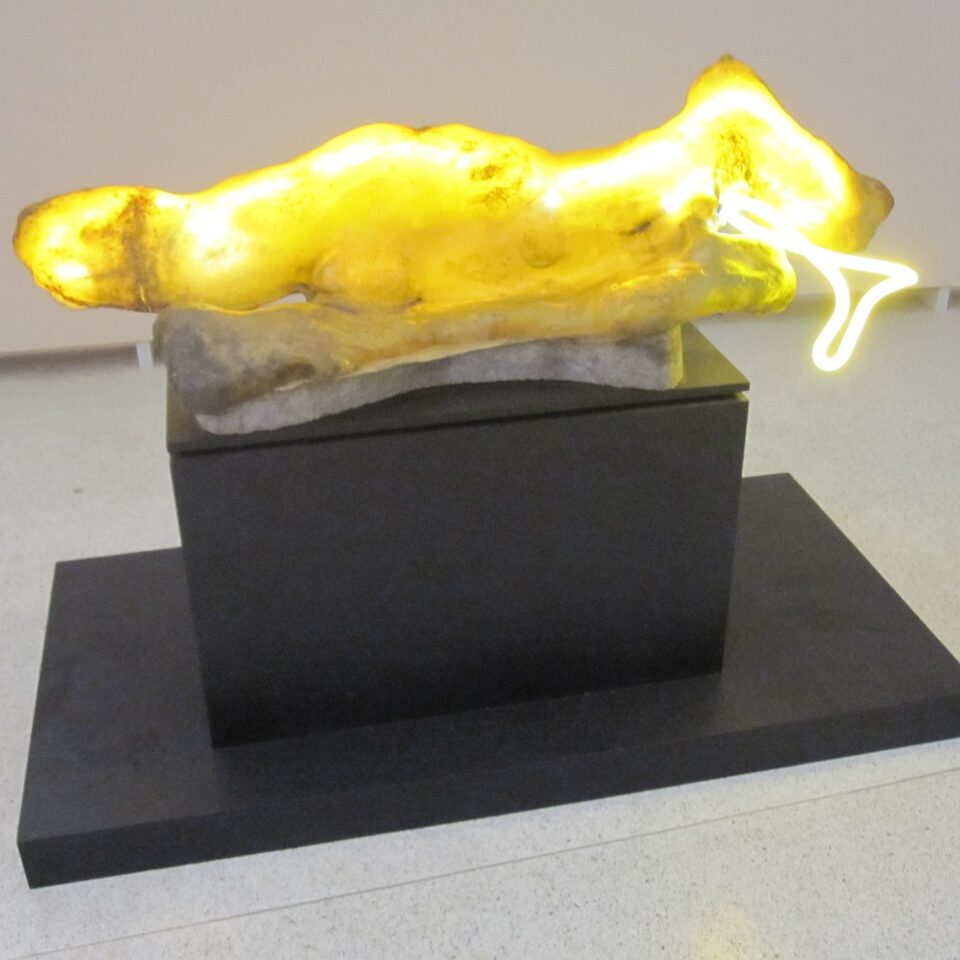
The support jig was made specifically for the sculpture Reclining Torso by Zdeněk Pešánek. Its shape precisely follows the surface of the sculpture and reinforces it on both sides of the crack so that the work can be handled safely during restoration.

From a 3D scan to a precise model
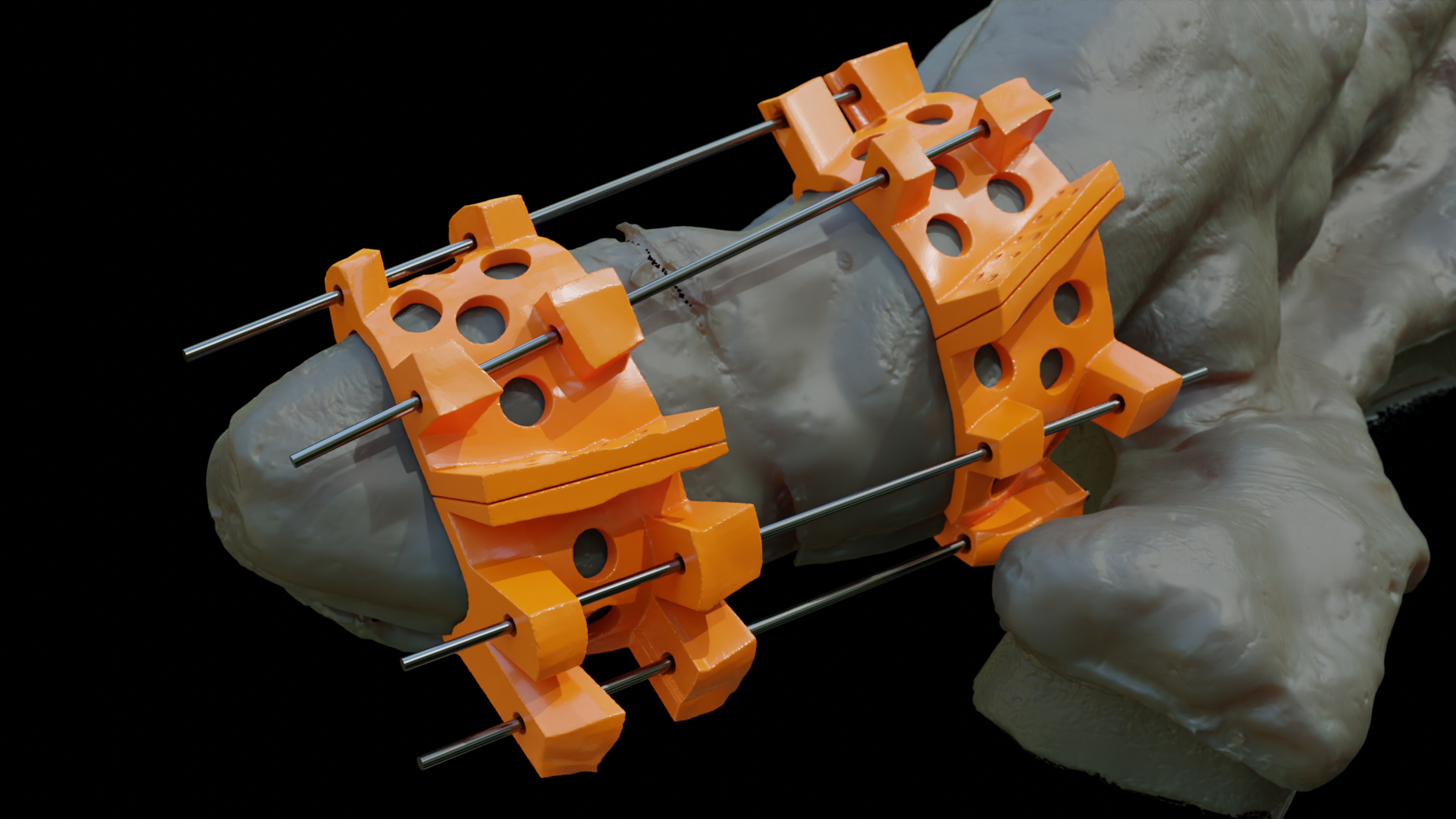
The design was based on a 3D scan of the sculpture, complemented by on-site measurements and consultations with the restorer. We digitally subtracted the shape of the sculpture from the model of the structure and created contact surfaces with a precisely defined gap for a soft protective layer.
A light, strong and quickly adjustable jig
The structure had to be stiff enough, yet light and easy to assemble. FDM 3D printing in Prusament PETG made it possible to optimise its internal structure, reinforce the stressed areas and split the whole jig into parts suitable for production and assembly.

Adjusted within two days
The first fitting showed that one part of the structure did not sit perfectly. We adjusted the digital model, reprinted the part and, after light sanding, it could be used. This ability to iterate quickly is one of the main advantages of 3D printing for one-off restoration jigs.
Safe handling of a historical sculpture
In 2021, representatives of the National Gallery Prague approached us with a request to create a special structure for restoration work on the sculpture Reclining Torso by Zdeněk Pešánek.
The work was created for the Czechoslovak pavilion at the 1937 International Exhibition of Art and Technology in Paris. Because of damage and a crack, the sculpture had to be reinforced during repairs so that it could be handled safely while keeping the repaired area accessible to the restorers.
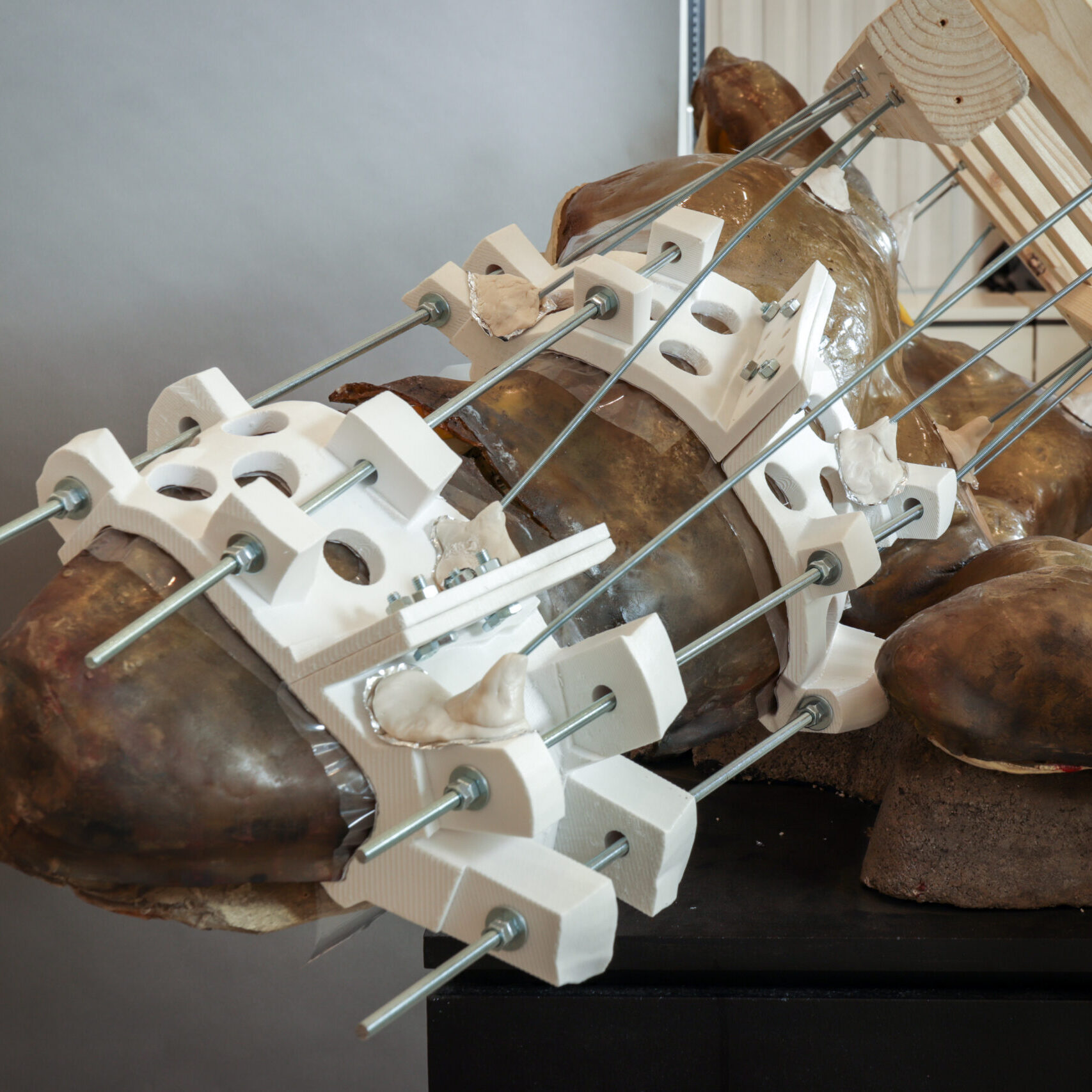
A standard universal jig could not be used here. The structure had to respect the irregular surface of this particular work, distribute the load to safe points and prevent further damage. The client therefore provided us with a detailed 3D scan of the sculpture and a basic concept of a jig made of two bands running around the work on both sides of the crack, to be connected to each other with threaded rods.
The scan alone, however, was not enough for a safe design. Our modeller therefore examined the sculpture in person and discussed its mechanical properties, the planned repairs and the required access to individual parts of the surface with the restorer. Control measurements also verified the correct scale of the digital model. Only then could the first design of the structure be created.
The shape of the contact bands was created by digitally subtracting the surface of the sculpture from the modelled support jig. The structure thus precisely followed the geometry of the work, with no need to approximate its shape by hand or laboriously adjust it during assembly.
Although the structure followed the shape of the sculpture, it could not touch its surface directly. The contact surfaces were therefore offset by roughly one millimetre to make room for a soft protective lining. At the same time, access to the repaired crack had to be kept and air had to be able to flow around the surface. The structure was therefore given openings for ventilation, weight reduction and easier handling.
The whole jig was divided into several separate parts connected with bolts, nuts and threaded rods. The restorers could thus assemble it directly around the sculpture without having to handle one large piece.
A structure ready for 3D printing
We chose FDM 3D printing as the production technology. It made it possible to create large, geometrically complex parts at a relatively low weight, while also offering quick changes if testing showed that some part of the structure was not right.
The material was Prusament PETG, which offered a suitable combination of mechanical strength, good printability and a reasonable price. If its properties had not been sufficient during testing, we could have switched to a tougher technical material, but in the end this was not needed.
From the start, the model was designed with FDM printing in mind, especially the orientation of the parts and the limitations of overhangs. Where overhangs could not be avoided, the structure was adapted to the use of print supports.
For greater spatial strength, we chose a hexagonal infill. We also increased the number of perimeters and top and bottom layers, creating a stronger outer shell without significantly increasing the amount of infill and the resulting weight.
The orientation of the individual parts on the print bed was also important. We aimed for the printed strands to run in the longest possible continuous lines and to support the structure in the directions of the expected load.
Once printing was finished, the client took over the individual parts and assembled them in the restoration workshop. The structure was completed with fasteners and a soft contact layer protecting the surface of the sculpture.
The first fitting showed that one of the parts did not sit exactly as required. We therefore adjusted the digital design, reprinted the part and then lightly sanded it. The whole fix took only two days.
With traditional manufacturing methods, a similar change could have meant a much longer wait, complicated manual adjustments or making a new jig. With 3D printing, we could address only the specific problem area and leave the rest of the proven structure unchanged.
Result
The complete project took about 65 hours, thirteen of which were spent on modelling and the rest on printing itself. The project involved a modeller, a 3D printer operator and a restorer, who then mounted the structure on the sculpture.
The result was a light, strong and easy-to-assemble support jig tailored precisely to a single historical object. The structure made it possible to stabilise the sculpture safely while keeping access to the area of the restoration work.
The project showed that 3D printing is a suitable technology for producing specialised jigs for one-off or very limited use. Besides low costs and fast production, its main advantage is the ability to react immediately to findings in practice and adjust individual parts without changing the whole solution.