


From the Bronze Age to the Digital Age: ŠPÉRA Teaches Foundry Work Differently
At Meet the Makers 22, the speakers were Pavlína Končická and František Vocel from ŠPÉRA (SUPŠ and VOŠ Turnov). They showed how 3D printing is changing the teaching of traditional foundry work and helping students focus on what matters – the craft itself.
The school’s official name is the Secondary School of Applied Arts and Higher Vocational School in Turnov, but teachers and students have long called it simply ŠPÉRA. The nickname comes from jewellery making (šperkařství), which is the school’s historical foundation and still one of its main specialisations.
František Vocel, one of the two teachers who spoke, originally worked as a foundry technologist. It was his personal experience in the field that led him to teaching: “I make a living from it, and I know the industry lacks young people. So I decided to start teaching what I do.”
The video recording is in Czech.Foundry work and 3D printing – the perfect combination
Foundry work is still a completely ordinary part of our lives – from drain covers to lamps. The basic principle? Create a cavity (mould) into which molten metal is poured. The pattern for this cavity can be made by hand, for example from plaster, wax or clay, but 3D printing greatly simplifies and speeds up the process.
Prusa Research gave the school Original Prusa MK4 and XL 3D printers for teaching, and students now routinely use them when designing patterns for castings. This lets them quickly test different variants, analyse mistakes better and dive deeper into the craft itself. “Instead of wasting time making the pattern by hand, they can focus on the casting itself,” says Vocel.
Students can use both permanent patterns (for repeated moulds) and lost patterns made from wax-like filaments. The school has also recently started experimenting with resin materials for vacuum casting.
Besides foundry work, students also get to know graphics tablets, 3D scanners, a plotter and a laser cutter, which improves their digital skills and flexibility.
A school that shapes not only metal but also personalities
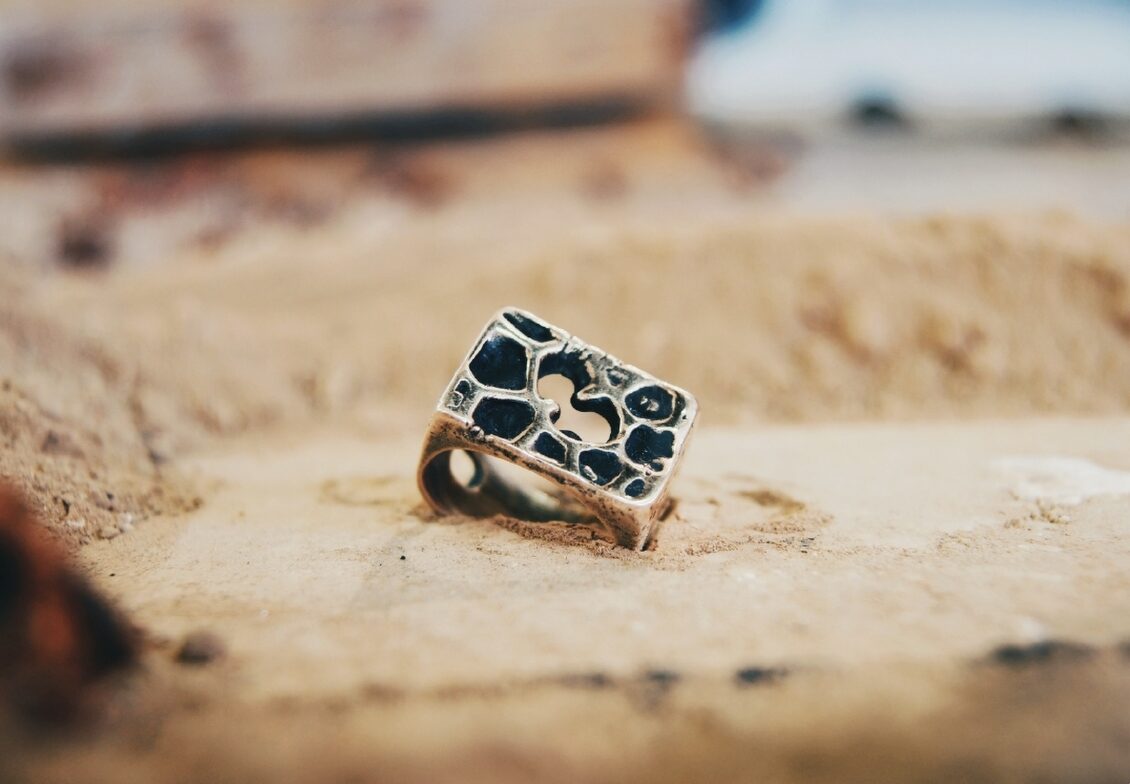
ŠPÉRA does not focus on just one type of metal. Students work with aluminium, bronze, brass, silver and even resin. Besides jewellery, they also make larger objects – such as lamps or decorative sculptures. Craft precision and digital tools are increasingly intertwined.
In the presentation, the teachers also showed current final-year projects: a folding snuffbox, a series of men’s accessories and a stylised dagger. “The school’s product is not objects. It is people who are enthusiastic about something and want to create,” they said during the presentation.
In 2025, for the first time, the school took part in the Maker Faire festival in Prague as an exhibitor.


